
By Deborah Hopkins, December 7, 2021
 We have long taught that issuing a letter of caution, warning, expectation, concern, and the like can cause more problems for agencies than it’s worth. A supervisor can caution, warn, set an expectation, or express concern for an employee verbally, then follow it up in an email, and achieve the same purpose, while lessening the likelihood of a grievance or complaint being filed. At FELTG, we refer to these types of documents as lesser letters, or more memorably, the yellow donut.
There are too many cases where agencies have spent hundreds of thousands of dollars, plus time and years of effort, defending these documents before various third parties. These documents don’t have any legal substance or definition and don’t even count as disciplinary actions. Just to get you started, see, Meaghan F. v. SSA, EEOC Appeal No. 0120152932 (November 2, 2016); Huddleson v. USPS, EEOC No. 0720090005 (2011) Massie v. DoT, 2010 MSPB 106; Ingram v. Army, Fed. Cir. No. 2015-3110 (August 10, 2015).
A few days ago, I came across a fairly recent EEO case that confirms the above: Will K. v. USPS, EEOC Appeal No. 2020000109 (Oct. 26, 2020). Among other claims raised, a USPS Operations Industrial Engineer alleged retaliation for protected activity after his supervisor discussed with him several performance concerns. The supervisor issued a Letter of Concern (LOC), which recapped the discussion. If you’re thinking that an LOC is not discrimination or reprisal and the supervisor did nothing wrong here, you’re correct in general. But it all depends on what is in the LOC. If the content includes a mention of events related to previous protected activity, the agency has a big problem.
In this case, the LOC contained a list of areas where the supervisor was concerned about the complainant’s performance, including:
- Mentioning that the complainant “claimed work-related illness/injury for stress” [which is an employee’s right, under workers’ compensation laws];
- References to a previous EEO settlement agreement; and
- An indication that the complainant “claimed discrimination and harassment at work, currently being investigated.”
The AJ granted summary judgment to the agency. On appeal, the EEOC found the reference to the Complainant’s protected activity was per se retaliation. Including this type of information in a Letter of Concern is “reasonably likely to either deter Complainant or others from engaging in the EEO process. Therefore, although Complainant ultimately has not demonstrated that the LOC itself was unwarranted, the Agency is still liable for per se retaliation with regard to some of the language used in the LOC.”
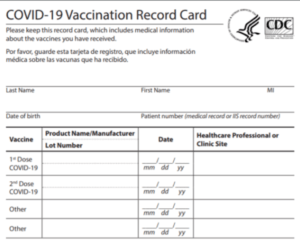
With exemption requests to the COVID vaccine requirement indicating protected activity under the EEO categories of disability and religion, we want to help your agency handle these cases properly and avoid even the hint of retaliation.
So, send all your supervisors, HR and EEO staff to the January 19 webinar Stop the Spread of COVID-related Retaliation in the Federal Workplace, and we’ll show you how. Hopkins@FELTG.com
 Equal Employment Opportunity Commission regulations have long required that Federal employees (or applicants) must make a request to initiate precomplaint counseling with an EEO Counselor within 45 days of the effective date of the personnel action, event or matter alleged to be discriminatory. 29 CFR § 1614.105(a)(1). And 29 CFR § 1614.105(a)(2) states that the agency shall dismiss a complaint or a portion of a complaint that fails to comply with the applicable time limits contained in § 1614.105, unless the Agency extends the time limits in accordance with § 1614.604(c).
 In the
  Executive Order 14043, Requiring Coronavirus Disease 2019 Vaccination for Federal Employees, is currently the basis of a lot of conversations in the Federal employment law world, and beyond. I know it’s a potentially divisive topic, and most people have strong feelings about it. However, FELTG’s focus is not on feelings, but rather on the legal issues related to the EO.
 By
By  By
By