
By Barbara Haga, September 12, 2022

I recently led a virtual training session on creating effective performance narratives as part of FELTG’s Federal Workplace 2022: Accountability, Challenges & Trends event, where I discussed several issues related to performance plans and narratives. I started with a quick discussion about plans for teleworkers. I thought it might be beneficial to explore that topic further here.

A request I have heard more than once in the past few months is a need for help with performance plans for teleworkers. This one usually leaves me scratching my head. How were managers holding people accountable for work results since 2020 if we are talking about creating plans for those workers in 2022?

Effective performance management and successful telework arrangements go hand in hand. That has been the requirement for more than ten years. Section 6502(b)(1) of the Telework Enhancement Act of 2010 stated that agencies policies on telework had to “… ensure that telework does not diminish employee performance or agency operations.”

There would have to be some way to assess performance results, which should have come through individual performance requirements.

OPM’s updated telework guidance is published in the 2021 Guide to Telework and Remote Work in the Federal Government. For our purposes, we are not going to distinguish between routine telework, situational telework, or remote workers, because for this topic, the type of telework arrangement doesn’t matter.

Here is OPM’s key point regarding teleworkers and performance plans:

When implementing the telework program, managers should keep in mind that performance standards for teleworking employees must be the same as performance standards for non-teleworking employees. Also, management expectations for performance should be clearly addressed in an employee’s performance plan, regardless of whether or not the employee is a teleworker. When an employee participates in telework, expectations related to accountability do not differ by virtue of the telework arrangement.  (p.36)(underscoring added)

This guidance is not new. It has been this way since telework came on the scene.  Does that make sense?

Same Outcomes Reached Differently

The best way I know to explain it is that the teleworker is held to the same outcomes, but how the manager gets to the point of measuring that outcome might be different. Let’s use an example of an employee relations specialist preparing discipline and performance-based actions. Here is the Fully Successful standard for the critical element Technical Competence that is similar to standards I have used for staff members in the past.

Demonstrates a thorough under-standing of law, rule, and regulation that applies to the assigned functional area.  Provides effective management advisory services to assigned organizations which reflect well thought-out solutions and viable alternatives. Documents are clearly written and are prepared in keeping with agency format requirements.  Notices and decisions 1) incorporate up-to-date information in terms of agency policy and third-party decisions, 2) include appropriate citations to contracts, policies, etc., 3) clearly and completely cover the elements of the case, and 4) incorporate required information on employee rights in the matter.  Demonstrates a basic understanding of other personnel functional areas to ensure that his/her own work is fully integrated with other functions.

It would seem to me that this standard could work in either an in-person or telework situation. Perhaps in the pre-pandemic world, notices and decisions such as these were left on my desk with the case file so I could review them before they were issued. That way I had detailed information on the clarity of the elements of the case, whether due process was observed, whether the notice incorporated the latest case decisions, etc. In a world where this work is accomplished at a different location, I could still see the letter if it was sent by e-mail to me or through an automated system. What might be new is how I could see the case file remotely, so there would have to be an alternate arrangement for me to get those, but I would be judging the work on the same things regardless of whether my employee worked on that action down the hall or miles away from the agency office.

Better Methods Across the Board

Perhaps the need to evaluate the teleworker’s performance means that I recognize a new way to identify the outcomes for all employees. Determining whether effective advice was given might have been easier in a pre-pandemic world. Maybe, as the office head, I attended staff meetings with the serviced organizations, and I received regular feedback in those sessions about the quality of guidance provided. There may also have been a lot of informal interactions in the cafeteria or walking down the hall with those managers who were receiving guidance from my staff members. Things may be different now, but I still need to know whether the advice is effective. Just looking at the letter being issued doesn’t really tell me how well the manager was advised throughout the process.  One solution would be to do some follow-up on a sample of actions for all staff, not just the teleworkers.

Using a neutral method of choosing which cases I am going to follow up on, I could select a certain number of lower-level disciplinary actions and some adverse and performance-based actions for each of my employees. I could design a questionnaire or, perhaps, set up a time for a phone call to interview the manager involved in the action with a set of standard questions about how well they were walked through the steps of proposing/taking action.

Ultimately, as the rater, I would have to determine if the advice was effective – whether my employee allowed the manager to decide or tried to force the manager to take a particular action, whether my employee explained the steps of how various actions might take place, and what the potential issues might be that could come out of an action in terms of grievances, complaints, and appeals, etc.

It’s interesting that a lot of positions have measures about providing effective advice in their performance plans, but when I ask how that is assessed supervisors often answer: “Nobody complained.” That’s not enough – telework or in-person.

Next month we will look at some other related performance matters!

 

By Michael Rhoads, September 12, 2022

Think of a personal secret you’ve been keeping.  Now imagine that, as part of an investigation, you must divulge that secret. You assume that the investigators will keep the secret confidential, only to find out that personal secret has been published for all to see online. This might sound like a plot line to a teenage drama, but revealing confidential information happens, intentionally and unintentionally, during investigations.

As part of Section 501 of the Rehabilitation Act of 1973, an employee’s medical information should be treated as confidential. Agencies often find themselves on the losing side when an employee’s medical information is disclosed, no matter the intent of the disclosure. A few recent EEO cases illustrate just how costly it can be when agencies improperly disclose or improperly request medical information.

Augustine V. v. U.S. Postal Serv., EEOC Appeal No. 2020001847 (Aug. 16, 2021)

The EEOC increased the amount of non-pecuniary damages from $25,000 to $70,000. The complainant, a city carrier at the United States Postal Service, had his medical information displayed publicly on the agency form used to request overtime or auxiliary assistance. The manager instructed the complainant to put his medical information on the form. Also, the complainant was not given a reasonable accommodation for his medical condition. The agency gave him a light-duty assignment, but the work he was given was completed in a few hours each day, and not over a full day’s work. The complainant was forced to use sick leave to make up the balance of the day.

The agency had not complied with orders from the EEOC in a previous case, which affected the outcome of this case. In the previous case brought by the complainant in 2017, the EEOC found the agency failed to make a good faith effort to accommodate and granted him compensatory damages. The agency opined that it had accommodated the complainant sufficiently in 2017. In this subsequent case, however, the EEOC disagreed with the agency over the accommodation.

The EEOC found the agency’s accommodation to be insufficient and increased the non-pecuniary damages from $25,000 to $70,000.

The EEOC wanted the agency to conduct a supplemental investigation to determine the compensatory damages, which it did not.  Also, the agency failed to train and discipline the management official responsible for the disclosure of the complainant’s medical information. A timelier compliance with the EEOC’s orders, and especially a timelier accommodation, might have saved the agency from the increase in non-pecuniary damages.

Salvatore K. v. Dep’t of Justice, EEOC Appeal No. 0120182095 (Jun. 23, 2021)

A contract company working with the US Marshals Service terminated a court security officer (CSO). The CSO is contracted to provide “security to the federal court and its judicial officers, witnesses, defendants, and attorneys.” The contract company is obligated to have their CSOs “… undergo and pass an annual examination …”  The complainant was diagnosed with borderline Type II diabetes in 2005.

During the annual examination in August 2013, a doctor cleared the complainant for duty as “medically qualified.”  A few months later, a second doctor reviewed the report and issued a medical review form to the complainant requesting ten different types of medical data from the complainant’s hemoglobin measures to a complete history of his medications. The first doctor responded to the second doctor’s medical review form by declaring the complainant medically fit for duty. The second doctor wasn’t satisfied with that response and issued a follow-up medical review form requesting an additional eleven different types of medical data.

The complainant did not comply with one of the initial requests to test his blood sugar four times a day from his fingers since it would interfere with his ability to hold a gun. In June 2014, the complainant’s district supervisor asked if he had any additional information to submit to the agency. The complainant declined to offer any further medical data. Six days later, he was terminated from his CSO position for failing to provide all documentation to determine his medical qualification.

In March 2015, the complainant filed an EEO complaint on the basis of disability, claiming the agency “subjected him to harassing, excessive, and unduly burdensome medical assessments and to requests for documentation.” The AJ issued a decision without a hearing in favor of the agency. On appeal, the EEOC reversed the AJ’s decision and found in favor of the complainant.

The EEOC found the agency did not prove its case for a few reasons. The complainant was able to perform his duties and was not a direct threat to himself or others.  The agency relied upon too broad of a series of generalized medical requests and not an individualized assessment of the complainant or any observations of his work performance.

The EEOC also took the guidance from the American College of Occupational and Environmental Medicine (ACOEM) to task. The ACOEM’s guidance violated the Rehabilitation Act by relying on generalized stereotypes rather than individualized assessments, which is required by the Rehabilitation Act.

The point of these two cases is clear: An employee’s medical information is confidential. There are legitimate, business-based reasons to request medical information. However, that information should be treated more like a game of Operation than Go Fish.

To learn more about how you and your agency can properly request medical records from an employee, join FELTG for Absence, Leave Abuse & Medical Issues Week, September 26-30 from 12:30-4:30 pm ET each day.

Stay safe, and remember, we’re all in this together. Rhoads@FELTG.com

By Ann Boehm, September 12, 2022

The decision-making entities in Federal employment and labor law have distinct jurisdictional limitations. Based upon some interesting recent decisions from several of these entities, they take those limitations seriously.

The Federal Labor Relations Authority (FLRA) website explains its mission as follows: “The FLRA exercises leadership under the Federal Service Labor-Management Relations Statute (the Statute), 5 U.S.C. §§ 7101-7135, to promote stable, constructive labor relations that contribute to a more effective and efficient government.” They are the labor law people.

The mission of the Merit Systems Protection Board (MSPB), according to its website, is to “’Protect the Merit System Principles and promote an effective Federal workforce free of Prohibited Personnel Practices.’” They explain that “MSPB carries out its statutory responsibilities and authorities primarily by adjudicating individual employee appeals and by conducting merit systems studies.” They are the performance, misconduct, and whistleblower protection people.

The MSPB’s website also explains what they do not do, such as “[h]ear and decide discrimination complaints except when allegations of discrimination are raised in appeals from agency personnel actions brought before Board. That responsibility belongs to the Equal Employment Opportunity Commission (EEOC).” They are not the discrimination people.

The jurisdictional divisions of labor should be clear, but sometimes employees, unions, and agencies file in the wrong place. The cases below demonstrate the problems with those errant filings.

Let’s start with the FLRA’s recent decision in National Federation of Federal Employees, Local 1998, 73 FLRA 111 (2022). The union filed exceptions to an arbitrator’s award that upheld the removal of a grievant for unacceptable performance.

I assume you astute FELTG readers are thinking: “They can’t ask the FLRA to review a performance-based removal, because that’s within the MSPB ‘s jurisdiction.” And that is correct.

The FLRA explained, “[u]nder § 7122(a) of the Statute, the Authority lacks jurisdiction to review exceptions to an award ‘relating to’ a matter described in § 7121(f) of the Statute” – such as removals for performance that are covered under 5 U.S.C. § 4303.  Id. at 112. “Such matters are appropriately reviewed by the Merit Systems Protection Board.” Id.

The FLRA lacked jurisdiction. It dismissed the case.

Another labor law entity, the Federal Service Impasses Panel (FSIP), also had to remind a union and agency that the MSPB handles the merit system. U.S. Army Corps of Engineers, Logistics Activity Center and IFPTE, Local 259, 2021 FISIP 019 (2022). The union and agency went to impasse over proposals discussing “Merit System Principles.” The agency proposed, “The Employer recognizes merit system principles as reflected in 5 U.S.C. § 2301(b).” The Union proposed to spell out the statutory language in 5 U.S.C. § 2301(b).

Relying on jurisdiction, the FSIP ordered the parties to withdraw their proposals. The FSIP explained that the Civil Service Reform Act created the MSPB to enforce the Merit System Principles. Thus, the FSIP explained, “[t]he interpretation of the Merit System principles is best addressed through the numerous MSPB decisions and studies.” Id. No need to include the merit system statutory reference in a collective bargaining agreement.

While the labor law entities were explaining what the MSPB does, the MSPB explained in Edwards v. DOL, 2022 MSPB 9 (2022), what it does not do. The employee claimed to be a whistleblower based upon his disclosures to supervisors about alleged race discrimination.

The MSPB said that allegations of perceived discrimination under the Civil Rights laws are not protected disclosures under the whistleblower laws. Instead, the proper forum for equal employment opportunity retaliation allegations is the Equal Employment Opportunity Commission. Id.

[Editor’s note: You can get the full picture of what the EEOC and FLRA do starting Sept. 19 as FELTG begins its EEOC Law Week and FLRA Law Week virtual training events.]

What’s the lesson to be learned from these cases? Pay attention to jurisdiction! It matters! It may be the easy way to win a case. And that’s Good News. Boehm@FELTG.com

By William Wiley, August 30, 2022

Sometimes an MSPB decision that identifies itself as nonprecedential is still an important decision. That’s especially true in times like these when we have three relatively new members of the Board who are being called on to reconsider established practices of Federal employment law, practices that they have not personally been called on to address before.

A good example of this is the Board’s Final Order in Feesago v. DoD, SF-0432-16-0458-I-1 (August 10, 2022) (NP). When analyzing the appeal of that relatively straightforward 432 unacceptable performance action, the members applied an important principle we have taught here at FELTG for over two decades:

The supervisor MUST tell the employee EXACTLY what level of performance he must attain during the PIP to avoid removal from his position.

In Feesago, the PIP initiation memo told the employee that she would be held accountable for mistakes in her performance in each of four critical elements. However, it failed to tell her how many mistakes she would have to make to be deemed to have failed to meet the standards for two of the critical elements. Therefore, the PIP was invalid for those critical elements.

The cure for this removal-reversing defect that we have incorporated into every PIP initiation memo that we have ever written here at FELTG is this: “During the PIP, you must not make more than three errors relative to this critical element or I will consider you to be performing at the Unacceptable level and thereby subject to removal from your position.”

By the way, I once had an agency attorney try to tell me that the above is an invalid “backwards” standard because it tells the employee what he cannot do rather than what he must do to be performing acceptably. Well, that’s an attorney who has not read the case law very carefully and has not applied common sense to the situation.

A Minimal performance standard (Level 2) is backwards and invalid if it does not clarify where the Unacceptable performance level is, e.g., the agency will lose the appeal if the PIP initiation memo tells the employee that the Minimal standard is “must not make more than three errors.” However, it’s perfectly fine (and according to Feesago, EXPECTED) that you will tell the employee that the acceptable level of performance is “must not make more than three errors.”

Relatedly, several years ago I overheard an Employee Relations specialist tell a supervisor that she should NOT tell the employee how many errors he was making during the PIP that would be counted toward evaluating the minimal level of acceptable performance. I guess that the ER specialist was concerned that if the employee were to be told that he had already exceeded the maximum error level early in the PIP, it would somehow undermine the PIP as “predetermined,” or the employee’s morale would suffer, or whatever. Well, that’s just wrong and a reversible error under the same principle that caused the loss of two critical elements in Feesago.

Of course, the employee should be told how he is doing during the PIP. How can he otherwise know if he is improving or continuing to fail? If you tell the employee that the minimal level of performance is “no more than three errors,” and the employee makes one or two errors during the first week of the PIP and then another couple of errors during the second week, he should be told. If you don’t, the Board will conclude that he has not been given a “reasonable opportunity to improve.”

But what about “morale”? What about “predetermined”? Aren’t those valid concerns? No, they are not. Nothing in law or common sense says that the agency must continue a PIP beyond the point of demonstrated failure. Think about it for a minute. When the supervisor sets a minimum level of acceptable performance in the PIP memo, he is saying that an employee who fails to meet that level is unacceptable and should be removed from the position. If the employee has more than the maximum-allowable errors during the first couple of weeks of a PIP, and the supervisor continues to allow the employee to stay in the position where he can make even more errors after that, doing so undermines the supervisor’s PIP-initiating statement relative to what constitutes Unacceptable performance. The employee cannot undo the early PIP errors by acceptable performance after the point of unacceptability. In this situation, an in-the-know supervisor will end the PIP early and propose that the employee be removed from the position at the moment of failure rather than wait until the PIP expires.

Sadly, here at FELTG we know that there is a fair amount of incorrect advice out there relative to taking unacceptable performance actions. What if the employee has exceeded the maximum number of tolerable errors during the PIP, but the HR/legal advisor erroneously tells the supervisor that the PIP cannot be ended early? How should the supervisor respond if the employee says, “Hey, boss, I’ve already failed. Why should I keep trying? Why are you keeping me on the job?” Easy, if true; the supervisor can say, “Yes, it looks like I’ll have to initiate action to remove you from your position at the end of the PIP because you’ve already failed the performance standard. I’ll continue to observe your performance during the remainder of the PIP so I can decide whether the action I take will be a termination, demotion, or reassignment.” Of course, if demotion and reassignment are not options, the supervisor should not lie. And, of course, the advisor should not be giving bad advice. Federal workplace law is filled with rocks and corresponding hard places for the uninformed.

Although two of the critical elements in Feesago were dismissed as invalid, there were two other critical elements that also formed the basis for the action on appeal. Unfortunately, during the PIP the supervisor did not provide adequate feedback to the employee as to how she was performing under these two valid standards, thereby violating the employee’s right to “a reasonable opportunity to improve her performance.” In the PIP initiation memo, the supervisor (in over-simplification) told the employee, “You are making errors relative to the critical element of Customer Care by doing X.” Then, during the PIP, the supervisor considered Y and Z to be examples of deficient Customer Service performance but did not tell the employee. In finding this oversight to be a critical deficiency in the action, the Board said, “the record does not reflect that any of these issues were ever mentioned to the appellant in the PIP discussions.”

If you are an HR specialist, attorney, or supervisor (or union representative, because we love you guys, too) involved in performance-based actions with unacceptably performing employees, it will be well worth your time to read Feesago from beginning to end. The new Board’s analysis throughout that decision is replete with old-school hints and helpful takeaways relative to how to (or not to) craft a performance-based action. I particularly liked the section where the agency seemed to fault the employee for granting bereavement leave so that a subordinate could make funeral arrangements for his grandmother. Board members have grandmothers, too.

Or you could just sign up to attend FELTG’s next MSPB Law Week seminar September 12-16 or UnCivil Servant September 7-8 and learn about this and all the other principles and best practices to employee accountability. This stuff is not hard IF you’ve been to the training. Wiley@FELTG.com

By William Wiley and Deborah J. Hopkins, August 22, 2022

In a recent MSPB case law update (the next one is October 20, if you’re interested), we discussed the Douglas factors and the new comparator analysis the Board laid out in Singh v. USPS, 2022 MSPB 15 (May 31, 2022). This dramatic change in precedent inevitably led to questions, which we thought were worth sharing with FELTG Nation. So here goes.

Q: For the comparator analysis under Douglas, is it required that the Deciding Official (DO) in her decision letter specify or identify any comparable cases, or is it sufficient to state, for example, “in consultation with HR, I considered how the agency addressed similar misconduct in the past.” Wondering what evidence, if any, needs to be put forth in the decision letter regarding comparators.

A: The best practice is for the DO not to consult with anyone they don’t need to. The requirement is for the DO (and the Proposing Official, or PO) to consider misconduct cases they know about that have the characteristics of “same-or-similar misconduct” we discussed in the training. If the DO knows of any cases that fit that definition, or if she decides to ask HR for same-or-similar cases (even though she doesn’t have to), good appellant’s lawyer will grill her on appeal about what those cases involve, and why she felt that they were different. In detail. If the PO/DO were to reference asking HR for same-or-similar situations, and the HR advisor says that there were none, then that HR advisor becomes the appellant’s witness who will be expected to provide details of the cases surveyed.

Unlike expected testimony on appeal, a broad statement will suffice for the purpose of the Douglas factor analysis in the proposal and decision notices. The language we have recommended at FELTG for more than a decade, as long as it is true, is something like: “I know of no other situations in which an agency employee engaged in similar misconduct and was, thereafter, disciplined at a lesser level.”

On the other hand, if the DO/PO knows of similar cases that support the penalty selected, then something like: “In two misconduct cases similar to this situation, removal was determined to be the appropriate penalty.” And finally, if a similar case is known of in which removal was not the selected penalty, something like: “I know of one other case of AWOL in which the employee was not removed. However, in that case there was no significant harm caused by the unapproved absences. In this situation, the employee’s absences caused the agency to expend $5,000 to hire a contract replacement.” Or whatever the distinction may be.

Q: What is the rationale for separately attaching a Douglas factors worksheet instead of solely discussing it within the proposal notice?

A: We’ve seen numerous cases over the years in which the proposal or decision notice contained the Douglas factor considerations along with the misconduct charges. Unfortunately, doing so has the potential of confusing the Board as to which fact statements are relevant to the charge and which are relevant to the penalty. We have learned from history that the MSPB generally expects us to prove every factual assertion relative to the charge (due process requirement), but only most of the fact statements relative to the penalty, although proving everything is always ideal. Therefore, when the misconduct facts get mixed with the penalty facts, the Board has a problem weighing them. We don’t want the Board to get confused about anything we do.

Separately, using a Douglas factors worksheet forces the PO to go through each of the 12 factors, evaluating those that are relevant and noting which are not. We have seen many cases in which an agency lost the penalty because the PO or DO ignored or failed to adequately address one or more factor. A worksheet reduces the possibility of making this mistake. Administrative judges are trained to assess each of the 12 factors in order. A worksheet lays that out for them to the benefit of the agency.

That said, it is not a critical error to include the Douglas factor analysis in the body of the proposal notice. Clearly delineated and identified as penalty factors separate from the misconduct charge facts, encompassing all 12 Douglas factors would work. But there is no reason you would want to go to that extra trouble and accept that extra risk.

A separate worksheet attached to the proposal notice, as we noted in the recent caselaw in the training, helps the Board understand (and affirm) the agency’s action. It is a good idea without a downside.

One final thought. For goodness’ sake, DO NOT violate the employee’s Constitutional right to due process. The Board will automatically reverse a removal, without consideration as to whether there was any harm, if the DO considers Douglas Factors relied on by the PO, but not communicated by the PO to the employee. See Braxton v. VA, DC-0752-14-0997-A-1, August 12, 2022 (NP).

This really is easy, folks. Just have the PO do a Douglas Factor Worksheet, staple it to the Proposal Notice, and fuhgeddaboudit. Hopkins@FELTG.com

By Ann Boehm, August 16, 2022

This administration is decidedly pro-union. The FLRA has two Democrats and one Republican on the Authority. There may be a perception that unions are untouchable in this environment, but that is just plain wrong. A recent decision from the newly constituted FLRA is illustrative. Bremerton Metal Trades Council, 73 FLRA 90 (2022).
The agency investigated a union representative, who was on 100% official time, for bullying and verbal abuse. The investigation showed she engaged in the misconduct over several years. The agency suspended her for ten days. The union grieved the suspension, leading to an arbitration hearing to determine whether the agency had jurisdiction to discipline the grievant.

The union “claimed that because the grievant’s schedule consisted of 100% official time, any Agency-imposed discipline would constitute an unfair labor practice” (emphasis added).

That is a bold argument. Even on 100% official time, the union representative is receiving a salary from the Federal government. Insulating individuals on 100% official time from any agency-imposed discipline would seemingly allow those officials to operate without accountability.

According to the arbitrator, the union rep “’engaged in “confrontational and bullying” behavior on a “regular basis’” which degraded “’the morale of those working around her’” and created an “uncomfortable working environment.’” Her behavior caused a chief steward to experience three panic attacks in one month, the last one sending him to an emergency room.

According to signed statements obtained by the agency, the grievant described her colleagues with words like “’r**ard,’ ‘stupid,’ ‘slow,’ ‘f**king p**sy,’ ‘f**king idiot,’ and ‘god d**n r**ard.’” As Dana Carvey’s Church Lady might say, “Well isn’t that special?”

Holy cow! A ten-day suspension seems light given her misconduct, but as aforementioned the union argued the agency could not discipline her at all because such discipline would interfere with internal union affairs.

The agency argued that the parties’ collective bargaining agreement enabled the agency to ensure the union office remained safe and usable, which justified the discipline of this union representative. Id. The arbitrator agreed with the agency, concluding the agreement “allowed the agency to discipline any employees who used the Union ‘office in a way not intended’ or who made the office’s ‘occupancy untenable.’”

The arbitrator noted an agency may discipline employees for conduct that is “’flagrant or otherwise outside the bounds of protected activity.’” Unsurprisingly, the arbitrator concluded the repeated and intentional bullying, with the goal of inflicting emotional distress, was for the grievant’s own benefit and not provoked. Therefore, it was flagrant and outside the bounds of protected activity.

The union filed exceptions with the FLRA, arguing the flagrant misconduct finding exceeded the arbitrator’s authority. The FLRA disagreed and denied the union’s exception. The union also argued the Arbitrator’s award was contrary to the Federal Service Labor-Management Relations Statute. Again, the FLRA disagreed and denied the union’s exception.

The agency won. Justice prevailed! Even in a pro-union administration, unions and their reps can and should be held accountable. That’s Good News! Boehm@FELTG.com


By Deborah Hopkins, August 16, 2022

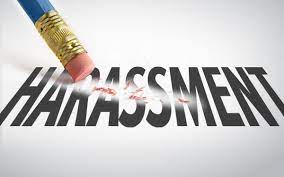
One of the topics we’ve been discussing in recent FELTG classes is “other harassment,” that is, harassment that’s not based on protected EEO categories. And one of the most common questions we’re asked is this: At what point a supervisor crosses the line from effectively supervising employees to creating a hostile work environment?

Hostile work environment harassment is a term of art in the EEO world, and requires a complainant to

prove three things:

  1. They were subjected to unwelcome conduct,
  2. The conduct was based on their protected EEO category, and
  3. The conduct was so severe or pervasive that it altered the terms, conditions, and privileges of employment.

The below supervisory actions, if exercised in a reasonable manner, are NOT harassment:

  • Assigning work
  • Setting deadlines
  • Creating a work or telework schedule
  • Assessing performance or providing feedback
  • Managing work groups
  • Setting a dress code
  • Disagreement on management style or decisions

The list is not exhaustive. The statute that gives supervisors this authority is 5 USC 301-302, which says the head of an executive department or military department may prescribe regulations for the government of his department, the conduct of its employees, the distribution and performance of its business … and to delegate to subordinate officials the authority vested in him … by law to take final action on matters pertaining to the employment, direction, and general administration of personnel under his agency.

Harassment is easy to allege, but not easy to prove. Let’s look at a couple of recent cases.

Case 1

The employee alleged harassment and reprisal when his supervisor avoided him or walked away from him on multiple occasions, and he claimed that his supervisor often responded to his questions by stating he did not know the answer and failed to provide him adequate guidance. He also claimed his chain of command treated him in a “hostile manner” when his supervisor “yelled” at him that he needed to fix something, and when his supervisor “grabbed [his] arm to pull [him] into a room” and “yelled” at him about reporting improper patient care. In addition, he claimed that the chief of staff “yelled at him, accused him of ‘making up our service data,’ and told him to ‘shut up’ during a meeting.

The MSPB, which had jurisdiction over this case because it was an IRA appeal, said that while these actions were indicative of an “unpleasant and unsupportive work environment,” they did not violate the law. Skarada v. VA, 2022 MSPB 17 (Jun. 22, 2022).

Case 2

In a recent case before the EEOC, a complainant alleged multiple incidents of harassment based on race, color, sex, age, and reprisal. Among the incidents she identified:

  • She received a Letter of Warning (we at FELTG recommend you NEVER issue these)
  • She was told that the Letter of Warning was serious and could lead to future disciplinary actions
  • Her access to work-related databases was revoked
  • A supervisor went through her desk to look for documents
  • A supervisor broke a souvenir that was on her desk
  • She did not receive assistance from upper-level management after she informed them her supervisor was targeting her
  • She was eventually removed

In response to the allegations of harassment the agency provided legitimate reasons for its actions, including that the complainant had engaged in 198 specifications of misconduct, including violations of the Privacy Act and Rules of Conduct of Maintenance of Personnel Records, as well as “unauthorized use of non-public information, intentional failure to observe any written regulation or order prescribed by competent authority, and violating the Rules of Behavior.” Also, the complainant did not respond to any of the charged misconduct.

EEOC said, “The image which emerges from considering the totality of the record is that there were conflicts and tensions in the workplace that left Complainant feeling aggrieved. However, the statutes under the Commission’s jurisdiction do not protect an employee against all adverse treatment … Discrimination statutes prohibit only harassing behavior that is directed at an employee because of their protected bases. Here, the preponderance of the evidence does not establish that any of the disputed actions were motivated in any way by discriminatory.”  Kandi M. v. SSS, EEOC Appeal No. 2021002424 (Apr. 18, 2022)

Want to know more about Other Harassment? Join FELTG for the Federal Workplace 2022 virtual event the last week of August for a session on that very topic. Hopkins@FELTG.com

By William Wiley, August 16, 2022

In the humble opinion of this old Board observer, President Biden’s recent appointees to be members of the US Merit Systems Protection Board have done a very good job with the content of the rulings they have handed down since beginning to work this spring. Most practitioners were glad to see anything coming out of MSPB HQ after a five-year drought of decisions. It has been a pleasant surprise to see the direction the legal analyses have taken is well-based and consistent with common sense, upholding much and modifying where necessary.

Save for one. Here’s the fact pattern in Chiovitti v. Air Force, MSPB No. PH-0752-21-0212-I-1 (July 12, 2022)(NP):

  1. The employee was removed based on a charge of Conduct Unbecoming.
  2. In the decision notice implementing the removal, the Deciding Official (DO) told the employee that he could challenge the removal decision by either filing a) a grievance under the negotiated grievance procedure or b) an appeal with MSPB, but not both.
  3. The employee chose to file a grievance in lieu of a Board appeal.
  4. The agency denied the grievance on unspecified “procedural grounds” i.e., not on the merits of the charged misconduct.
  5. The union, on behalf of the employee, invoked arbitration.
  6. The grievance was pending before the arbitrator for nearly a year. After discussions between the agency and union representatives, the union agreed to withdraw the grievance. In exchange, the agency agreed not to contest MSPB’s jurisdiction over the termination.
  • While not clear from the opinion, it appears that during the processing of the grievance, the agency was arguing that the matter could not be arbitrated because the employee is a probationer. Perhaps this was the “procedural grounds” on which the agency denied the grievance?
  • 5 USC 7121(c)(4) specifically excludes from arbitration any grievance concerning an “examination,” and the probationary period has long been held to be part of the “examination” process for federal employment.
  • To add a bit of confusion to all of this, two weeks after the union’s withdrawal of the grievance, the agency representative became aware of an unusual agency-specific procedural agreement that established that the employee was not a probationer, i.e., that he had completed probation/examination and that the merits of the removal indeed could be arbitrated.
  1. On appeal to MSPB, the administrative judge dismissed the appeal as filed too late. After all, the termination had taken place over a year previously and the employee’s choice of the grievance procedure precluded a later choice of the MSPB appeal process.
  2. On petition for review, the employee argued that good cause existed for excusing the late filing because the DO had provided incorrect information when he told the employee he could file either a grievance or an MSPB appeal.

In deciding the PFR, the new Board members remanded the case to the administrative judge. The issue for the AJ to decide on remand is whether the DO provided “incorrect information” in the decision notice regarding whether the appellant had a right to file a grievance concerning the termination.

OK, wait just a minute.

The employee was in a bargaining unit. Bargaining unit employees have the right to file a grievance. The employee chose to file a grievance. So where is the possibility that the DO provided the employee “incorrect information”?

Well, as they say on the true-crime podcasts, it’s complicated:

  • The Board’s decision speaks of a “decision notice.” Although not addressed specifically, with a decision notice, there most probably would have been a “proposal notice.” Those two steps in removing an employee come to us from 5 USC Chapter 75, Subchapter II on adverse action procedures. As the agency appears to have used adverse action procedures to remove the employee, it must have considered him to meet the definition of an “employee” who is entitled to have those due process procedures used: “an individual in the competitive service who is not serving a probationary or trial period under an initial appointment,” 5 USC 7511(a)(1). In other words, not probationary, because in general agencies do not use proposals and decisions to fire probationers.
  • Then, when the employee filed a grievance to contest the removal, the agency dismissed his grievance on “procedural grounds.” Unfortunately, the Board’s decision does not specify what those grounds are. Could be that the employee filed his grievance beyond the time limit for initiating a grievance. That’s a common procedural failure that would make the grievance nonarbitrable. Or, it could have been that by this stage, the agency was arguing that the employee’s grievance was nongrievable because he is a probationer. Failure of a probationary period is excluded by law from any statutory grievance procedure.
  • Did the agency initially believe the employee to be a non-probationer at the time of removal? That would explain the apparent use of adverse action procedures. And then, did the agency deny the subsequent grievance because it changed its mind and decided to argue that the employee was a probationer not entitled to grieve his removal? We can’t tell from the decision whether that is the case. However, if correct, that would explain why the union was willing to withdraw the employee’s grievance from arbitration and the agency agreed not to contest the employee’s substitute option to appeal to MSPB.

Unusual and complicated situation.Position changes. Mutual misunderstandings. All are within the confluence of federal labor laws and federal removal/termination laws. We can get past all of that. But where does MSPB see that the agency might have violated the employee’s rights by giving him “incorrect information” relative to how the removal could be challenged? He was a bargaining unit employee. The DO was correct to tell him he could file a grievance because bargaining unit employees can file grievances. Could it be that the Board is trying to say that if the employee was a probationer, the DO should not have told him he could file a grievance because a probationer cannot grieve a termination?

If so, that is an untenable dangerous position in which to put the agency, and unfair to both the union and the employee. It is not up to the agency to decide unilaterally whether a bargaining unit employee is a probationer!

Unions and management sometimes disagree on whether a matter is grievable or arbitrable. A union/management relationship is based on the principle that either side may have an opinion different from the other. Happens all the time. The mechanism for resolving those disagreements is the negotiated grievance procedure. In fact, the very first topic that the federal workplace labor law says must be covered by a grievance procedure is that “any collective bargaining agreement shall provide procedures for the settlement of grievances, including questions of arbitrability.” 5 USC. 7121(a)(1). If the DO believed the employee to be a probationer and, therefore, had NOT told the employee he may be able to file a grievance, he would have been potentially depriving the employee and his union of the option of challenging management’s probationary determination through the negotiated grievance procedure.

The law is clear. The merits of the termination of a probationary employee may not be challenged by grieving the matter to arbitration. However, there are several situations in which a union might choose to file a grievance relative to the removal of a probationer, e.g.:


  • The statutory definition of “grievance” includes “any claimed violation … of any law.” 5 USC 7103(A)(9). If management were to fire an employee during probation because the employee engaged in union activity, that would be an unfair labor practice and a violation of federal law (5 USC 7116(a)). Therefore, a union or employee could file a grievance relative to the termination of a probationary employee if the claim was that the agency had committed an unfair labor practice.
  • Perhaps the employee wants to grieve that the circumstances that led to his removal were in reprisal for his whistleblowing. That’s another law violation.
  • Does the negotiated grievance procedure cover claims of race/sex/age/etc. discrimination? If so, the terminated probationer might want to pursue a grievance based on one or more of those protected categories.

If this employee was a probationer, the DO had no obligation to inform him of any redress rights at all — MSPB, grievance, or otherwise. At least, not according to government-wide regulations or statute. However, the DO chose to do so anyway. In the alternative, if the employee was beyond probation and thereby entitled to have the DO explain his redress rights to him, it did so when it told the employee he could file either a grievance or an MSPB appeal, but not both.

In either situation, the fact that the employee through his union filed a grievance that was withdrawn prior to arbitration does not lead to the conclusion that the DO made a mistake in the information he provided. The fact that the agency and union came to believe later during the pendency of the grievance that the employee’s removal may be nongrievable, or that in fact the employee is beyond probation and entitled to a full merits appeal to the Board, does not change the election that the employee made.

Did the agency provide misinformation to the employee when it told him he could file a grievance relative to his removal? No, that information is correct regardless of whether the employee was still serving as a probationer or had completed his probation.

The notification that an agency provides that an employee may have the right to file a grievance in no way implies that the grievance will be reviewed on the merits by an arbitrator. Agencies and unions are entitled to disagree as to whether a particular matter is grievable or arbitrable, and to resolve that disagreement through arbitration. The Board’s decision is misplaced in that it remands the case to the AJ for a determination that is unable to be made.

Several years ago, FELTG developed a standardized rights notice that agencies can use to notify employees of the various redress procedures available to them should the agency impose an adverse action. The FELTG rights notice (copy given to all who attend FELTG’s MSPB Law Week seminar) refers the employee to the negotiated grievance procedure with the admonition that the employee should seek advice from a union representative prior to selecting that option. We continue to believe that is the better practice, certainly better than management deciding for the employee and union whether a particular aspect of a disciplinary action can be submitted to arbitration on the merits. Wiley@FELTG.com

By Dan Gephart, August 16, 2022

If you’re a Federal supervisor and you see your name in the Washington Post, chances are it’s not going to be a positive experience. And that was certainly the case for the high-ranking senior government official whose demeanor and leadership were questioned by anonymous staff members in a story last month.

That this personnel investigation was dragged onto a public website that generates 70 million unique views each month doesn’t look good for anyone involved. I will not weigh in on any of the specific details of this story, nor make any judgments. But I will share three important lessons we can take away from the article.

1. A disability may appear to be something else. Before you rush to judgment on an employee’s behavior, be aware that some disabilities exhibit themselves in ways you wouldn’t expect.

More than 37 million Americans, a whopping 11.9 percent of the population, had some form of diabetes in 2019, according to the American Diabetes Association. That’s a lot of people. When blood glucose levels become too high or too low, a diabetic individual’s mental status can become impaired. It could lead to slurred speech and moodiness that mimic intoxicated behavior. It may seem obvious to you that an employee is drunk, but that may not be the case.

When an employee shows up to work looking disheveled, acting irritably, and appearing sleep-deprived, you may think she was out on a bender. She could have anxiety, post-traumatic stress disorder, or may be undergoing a mental health crisis.

Are you supposed to somehow figure this out on the fly? No. Are you supposed to ask the employee if he has a disability? Heck no! The law prohibits your agency from asking questions likely to elicit information about a disability at this stage. General questions such as, “Are you feeling okay?” are usually appropriate, as is telling the employee: “Hey, did you know we have a Reasonable Accommodation Coordinator?  I’ll email you her contact information just in case you’d like to talk to her.”

If the employee is indeed drunk, remember that you can and should discipline the employee – even if the employee has a disability such as alcoholism.

2. You should hold all employees accountable, even if they may have a disability. Let’s say an employee arrives late for a couple of times in one week. Could a change in medication or a hidden disability be the cause? It’s possible. But that doesn’t mean you ignore what’s happening. Yes, you can point the employee to the RA Coordinator. Then document the incidents using your 75-cent tool (prices may change due to inflation). If the misconduct or poor performance continues, take the appropriate action

3. Reasonable accommodations are not a one-and-done thing. What if the employee had previously informed you of his disability and had already received an accommodation? And now, out of the blue, the performance or conduct worsens.

This is a good reminder that reasonable accommodations are not lifetime appointments. It’s good practice to reassess the accommodation if an employee appears unable to perform the essential functions of their job. Medications change (as do their side effects), and conditions improve, worsen, or simply change over time. Most reasonable accommodations are no- or low-tech. But if you’re providing a high-tech accommodation, you need to ensure it’s compliant with current and changing technology needs and be aware if there’s a new alternative product that would be effective.

The pandemic changed us all. If your employees are returning to the physical workplace after more than two-plus years, now may be the time to re-evaluate the effectiveness of their reasonable accommodations. It’s one of those rare things you can do that is a true win-win for everyone. Gephart@FELTG.com

[Editor’s note: Join Attorney Katherine Atkinson for the session Revisiting Existing Reasonable Accommodations, one of the 11 sessions that make up FELTG’s Annual Federal Workplace 2022: Accountability, Challenges & Trends August 29 – September 1.]

By Michael Rhoads, August 16, 2022

Here at FELTG, we teach that there are five Elements of Discipline when a supervisor needs to prove an employee committed a misconduct. The second element deals with what you as a supervisor/ER/LR/HR Specialist can do to pro-actively notify your employees of the rules.  For the sake of argument, we’ll say that the rule we’ve established is legal and enforceable by agency standards. Let’s say your agency has established a rule where no one is allowed to keep open food or beverages on their desk overnight, or a rule that employees must remove food from the break room fridge before the close of business on Fridays.

There are a few ways to notify employees of a new rule. First, take a moment to introduce the rule at your next group meeting. If there is a common area in your office, post any new rules or agency regulations in a prominent spot. If your agency has a SharePoint site, or an agency policies page on your website, you can post the rule there as well – and direct employees there to view the rules.

The direct route is usually the quickest and most efficient. If you know the culprit who is leaving out open food or beverages, or violating the fridge policy, then addressing it with that individual is a much better practice than calling a team meeting with everyone, when only one person is violating the policy.

Face-to-face communication has been greatly reduced since March 2020. You can accomplish the direct approach over your favorite web-based software (e.g., MS Teams, Zoom, etc.), or by simply using a phone of your choice to call the person directly.

Let’s say the violation of these rules has become a pastime at your agency, and the supervisors have not been enforcing the rules. If you don’t enforce the rule, you lose the rule, so in order to re-establish the rule the agency must re-establish notice (send an email or mention it in a team meeting, for example).

And last, but certainly not least, there is a strong case for common sense.  Shouldn’t everyone know that if food is left out on a desk, opened, for too long, it may cause alarm to your fellow employees?  Not to mention any smaller critters that may be lurking about.

To find out the other four Elements of Discipline, join FELTG President, Deb Hopkins on September 7-8 from 12:30 – 4:00 PM ET each day for our flagship course, UnCivil Servant: Holding Employees Accountable for Performance and Conduct.

Stay safe, eat in good health, and remember, we’re all in this together. Rhoads@feltg.com