
By Deborah J. Hopkins, December 11, 2024

Quick facts:

  • The end of the year is a good time to review performance standards for clarity.
  • If performance standards are vague, an agency can clarify expectations either before or during the PIP.
  • If the agency writes backward standards, the Board will overturn a performance-based removal based on those standards.

With a new year coming, now is an excellent time for supervisors to look at their employees’ performance standards and review whether they might benefit from clarification. As I always say in my performance classes: “Poorly written performance standards aren’t really a problem if the work is getting done – but they quickly become a problem if an employee’s performance is unacceptable.”

If the work is getting done, many supervisors don’t really concern themselves with how the standards are written until it comes time for annual performance appraisals. And although the regs say that at any time the employee’s performance becomes unacceptable, the agency should address the situation by implementing a PIP (5 CFR § 432.104), poorly written standards too often serve as a roadblock to accountability.

Sometimes, the supervisor decides to hold the employee accountable (hooray!) but unfortunately misses an important step in the process. Consider Zepeda v. NRC, 2024 MSPB 14 (Oct. 20, 2024). The appellant was a special agent for the Nuclear Regulatory Commission’s Office of Investigations, and her supervisor put her on a PIP for three of her critical elements:

  • Planning and preparation for assigned investigations;
  • Conduct of investigations/assists to staff; and
  • Preparation of reports of investigation and assists to staff closure memoranda.

Id. at 2.

At the conclusion of the PIP, the agency removed her for failing all three elements. The MSPB AJ, who presided over the appeal, found the agency’s performance standards were invalid. The AJ reversed the removal, and the Board agreed. Here’s why:

  1. The agency had a 5-level rating system and did not define the “minimal” level of performance, which is considered acceptable performance under the law. Jackson-Francis v. OGE, 103 M.S.P.R. 183, ¶¶ 6-7 (2006). The appellant’s performance plan “only defined fully successful performance for each critical element; it did not define minimally successful performance that would have allowed the appellant to avoid removal…” Zepeda at 5.
  2. The agency did not clarify the employee’s performance standards during the PIP. As the Board noted, “[a]n agency may cure otherwise fatal defects in the development and communication of performance standards by communicating sufficient information regarding performance requirements at the beginning of, and even during, the PIP.” at 6, citing Henderson v. NASA, 116 M.S.P.R. 96 (2011). Had the agency clearly defined what was expected for level 2 performance at this point, the action may well have been sustained. However, this leads us to:
  3. The agency’s attempt to define level 2 performance contained invalid backwards standards. This is a too-common mistake where agencies, in an attempt to clarify expectations, describe the performance expectation as work that doesn’t get done rather than the level of work that’s required.

For example, on one of the appellant’s performance standards, on the subcomponent for the quantity of work completed, the agency informed her that minimally successful performance would be met if she completed “a less than expected quantity,” which according to the Board meant the appellant would be successful “by producing nothing at all.” Zepeda at 7. In other words, backward standards are impossible to fail because of the way they are written. Therefore, a removal for failing such a standard cannot withstand appeal.

OPM has a helpful guide to identifying backwards standards, and includes the following to assist:

To help you determine whether you are writing a backward retention standard, ask:

  • Does the standard express the level of work the supervisor wants to see, or does it describe negative performance? (Example of backward standard: Requires assistance more than 50% of the time.)
  • If the employee did nothing, would he/she meet the standard, as written? (Example of the backward standard: Completes fewer than four products per year.)

The problems … that backward retention standards cause rarely surface until it’s too late. To avoid problems, it is worth taking the time when first developing the retention standards to ensure they are not … backward.

There’s much more in the case we’ll consider in future articles. If this is an area that causes concern, consider bringing FELTG to your agency for a workshop-based approach to writing legally sufficient performance standards. hopkins@feltg.com

Related training:

By Ann Modlin, December 11, 2024

Dear Santa:

With a new administration taking over in January, changes are sure to happen. Change can be scary, but I’m an eternal optimist. As a result, I’ve decided to go big this year. Here’s what I’d like for Christmas:

1. An end to numerical redundancy.

There is absolutely no need to ever write out a number and put the numeral in parentheses. This is what I’m talking about – ten (10); forty (40); seventy-five (75). Please make it stop, Santa. The easy rule is that numbers are written out one through ten (or nine, depending on your style guide), and numerals are used for 11 and up.

2. A budget from Congress.

I’m pretty sure I ask for this every year. Despite what some people think, the Federal government does a lot of good things. It takes money to do those good things. Federal employees should not have to worry about funding every single year! Congress needs to pass a budget now!

3. Help supervisors and advisors understand the burdens of proof are low for disciplinary and performance actions.

To discipline an employee, the agency must show that, more likely than not, the employee engaged in misconduct and that the penalty was reasonable — just 51%.

To remove a poor performer, the agency must show that any reasonable person might (not “would”) agree that the employee performed at an unacceptable level — just +/- 40%.

Easy as pie! (Speaking of pie, let’s add an apple pie to this list.)

4. Simplification of probationary and trial periods.

The probationary or trial period is a magical timeframe during which agencies may terminate Federal employees for unacceptable performance or misconduct without the due process rights that attach after that period. It should be simple to know who is a probationary employee and who is not, but sadly, it can be very complicated. Perhaps the new Congress and Administration could go to work on simplifying the language about probationary and trial periods in the U.S. Code. And heck, why not just make an across-the-board two-year probationary period for all competitive service and excepted service employees? This would take away some of the confusion. (I told you I’m going big this year).

5. Simplification of the Federal EEO process.

Santa, please don’t laugh at this one. The process is overly complicated, and I’m not sure it really helps remedy illegal discrimination. And EEOC Administrative Judges are completely overloaded. How about a pilot program with one agency trying the EEO system used by the private sector. Here’s how it works:

  • The employee has 180 days to file a complaint with the EEOC.
  • The EEOC notifies the agency of the complaint within ten days of receiving the complaint.
  • The EEOC offers voluntary mediation.
  • The EEOC has 180 days to investigate the claims, and the agency may submit a written response to the complaint.
  • If the EEOC does not complete its investigation within 180 days, the employee has a right to sue in Federal district court.
  • If the EEOC completes the investigation within 180 days, the EEOC can decide to sue on behalf of the employee or dismiss the complaint and give the employee a notice of right to file suit in Federal district court within 90 days.

This process works for private-sector employers. Why not give it a shot for the Federal government?? (Yep – I’m going big!)

6. Limit collective bargaining agreements to 150 pages.

I sense you may be laughing at this one too. No one wants to read hundreds of pages in a collective bargaining agreement.

7. A horse.

I have asked for a pony for many years, and no luck so far. In the spirit of going big, I would like a horse.

Merry Christmas and Happy New Year, Santa! modlin@feltg.com

Related training:

By Dan Gephart, December 11, 2024

Quick facts:

  • When disciplining for AWOL, you have to prove not only the alleged facts but also the charge elements.
  • AWOL of more than five days typically justifies termination.
  • Older cases reveal that, depending on some factors, even fewer than five days could justify termination.

Over the Thanksgiving break, I found myself glued to HBO’s “Yacht Rock: A DOCKumentary.” For the uninitiated, yacht rock is a smooth and melodic, California-based blend of jazz, rhythm and blues, and soft rock that dominated radio airwaves between the mid-70s and mid-80s. Think “Ride Like the Wind” by Christopher Cross, “Black Friday” by Steely Dan, “What a Fool Believes” by the Doobie Brothers, or, basically, any other song with the voice of Michael McDonald.

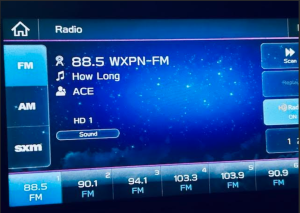
The documentary was fun to watch, but then I started hearing these wispy songs wherever I went. I couldn’t escape them. This morning, I got in the car, turned on the radio, and was hit with the should-be-long-forgotten classic “How Long Has This Been Going On” by Ace. That yacht rock earworm has burrowed way deep into my temporal lobe.

It’s a fitting song, after all, since I’m writing today about Absence Without Leave, a disciplinary charge more affectionately known as AWOL. How many hours of AWOL justifies termination? In general, the answer is usually AWOL of greater than five days

Example 1: Young v. USPS, 14 MSPR 549 (MSPB 1983). A USPS mail handler was removed for fraudulent use of sick leave requests and AWOL. The agency charged the employee with 19 instances of AWOL, totaling 122 hours. In the initial decision, the AJ found only six instances, totaling 40.75 hours were supported by preponderant evidence. However, the AJ noted that all of the AWOL took place in a short period of time between June 4 and July 19 of the same year.

Although the mail handler’s performance had been fully satisfactory for 17 years, it was outweighed by his more recent record of unreliable attendance and its impact on the agency’s ability to accomplish its mission. The removal was upheld.

Could removal ever be deemed reasonable for AWOL of a smaller number?

Absolutely. Let’s try 17 AWOL hours, the number you’ll find in Banks v. DLA, 29 MSPR 436 (MSPB 1985). After a long stretch of unauthorized absence, an employee stated, through a union representative, that he was being treated for depression and work inhibition. The agency initially sought to remove the employee for AWOL but then made an alternative offer: We’ll put the proposed removal into abeyance and place you in a one-year probationary period. However, the employee refused to sign the paperwork.

Subsequently, the employee was AWOL for a combined 17 hours over a one-week period, and it was solely those absences that formed the basis of the agency’s removal action.

The MSPB ruled the removal was “reasonable under the circumstances of this case.”  The Board pointed out the absences came shortly after the employee was warned about the previous absences.

How about eight hours or one day?

In Moxley v. VA, 36 MSPR 345 (MSPB 1988), a nursing assistant was placed on a sick leave restriction, requiring her to obtain medical certification to verify any use of sick leave. She requested sick leave for eight hours for later that month. The agency gave her five days to submit a medical certification of the need for sick leave. She didn’t, and the agency charged her AWOL when she failed to show up on the requested day.

The MSPB found the agency’s penalty of removal was reasonable due to several factors,  including the fact she had previously been suspended twice for similar AWOL offenses. [A quick note here: FELTG considers suspension an irrational option with an AWOL charge. Better to consider a reprimand in lieu of suspension.]

To recap: AWOL is a leave status – not automatically a disciplinary action. But AWOL is also a disciplinary charge. In general, removal is appropriate for AWOL of longer than five days. However, it may be appropriate for shorter stretches, such as 17 or eight hours, although it’ll depend on other factors. Whatever the length of absence, however, be sure to consider the following elements when disciplining for AWOL:

  • The employee was absent without authorization.
  • If leave was requested, denial was reasonable. gephart@feltg.com

Related training:

By Frank Ferreri, December 11, 2024

Quick facts:

  • A VA technologist was allegedly bullied after requesting accommodations for a mold allergy.
  • The technologist filed an occupational disease claim based on an emotional condition.
  • ECAB sent the case back to OWCP to consider new evidence from an arbitration decision that found the technologist was a qualified individual with a disability.

Sometimes, one thing leads to another. And, sometimes, one incident of legal significance opens the window to one or more other claims.

For example, there’s S.W. and Department of Veterans Affairs, No. 22-0565 (Oct. 17, 2024). It started with medical technologist’s complaints over mold in the workplace and ended up in a workers’ compensation claim, with a stop in disability-based bullying along the way.

What happened?

The technologist alleged he sustained an allergic reaction with respiratory, neurologic, and visual symptoms due to exposure to mold at his work location dating back to 1990. About two months later, the technologist filed another occupational disease claim alleging he sustained an emotional condition due to:

  1. Harassment by coworkers; and
  2. Disciplinary actions by supervisors.

Specifically, the technologist alleged: 1) two coworkers swore at him during training; 2) he was subjected to a pattern of discrimination; 3) his supervisor subjected him to disparate treatment and hostility on the basis of disability related to the mold allergy; and 4) he was denied reasonable accommodations.

OWCP denied the technologist’s emotional condition claim, finding the evidence of record was insufficient to establish a compensable employment factor. OWCP twice denied the technologist’s request for modification.

Later, OWCP received a union grievance arbitration, which found the technologist was a qualified individual with a disability based on his mold allergy. The decision also noted the agency discriminated against the technologist by not providing reasonable accommodations.

Despite this evidence, OWCP denied another request for reconsideration from the technologist, prompting him to take the claim before ECAB to require OWCP to reopen the case.

What did ECAB say?

Under 20 CFR 10.606(b)(3), to require OWCP to reopen a case for merit review, a claimant must provide evidence that:

  1. Shows OWCP erroneously applied or interpreted a specific point of law;
  2. Advances a relevant legal argument not previously considered by OWCP; or
  3. Constitutes relevant and pertinent new evidence not previously considered by OWCP.

ECAB determined OWCP improperly denied the technologist’s request for reconsideration of the merits of claim. ECAB faulted OWCP for not taking into consideration the contents of the union arbitration decision, which ECAB found was “new and relevant evidence regarding the underlying merit issue of whether [the technologist had] established a compensable employment factor.”

According to ECAB, the grievance arbitration decision, which found the technologist was a qualified individual with a disability based on his mold allergy, met the criteria for a merit review under 20 CFR 10.606(b)(3) — the decision constituted relevant and pertinent new evidence not previously considered.

Thus, ECAB directed OWCP to take another look at the case with the new evidence in hand and issue a new decision.

It isn’t every day that allergies, harassment, disabilities, and workers’ compensation pile up on an agency’s plate. However, it’s a reminder that addressing allegations of disability-based bullying early can make for a smoother and more peaceful work environment.

And remember: Reasonable accommodation requests don’t live in a vacuum. How an agency responds to an employee’s request could mean the difference between following multiple laws properly or ending up with compliance headaches. info@feltg.com

Related training:

December 11, 2024

Thank you for your question.

This query came in from a Title V employee. For those readers not familiar, a RIF is a Reduction in Force, which is a non-disciplinary action an agency takes when it eliminates a person’s job because of a legitimate reason (such as budget).

The answer to your question will depend on your employment category.

If you are a career employee who is not a member of a collective bargaining unit, then you have the right to appeal the RIF to the Merit Systems Protection Board if you believe the agency did not properly follow RIF procedures (for example, you did not receive 60 days advance notification of the RIF). 5 CFR 351.901.

If you are a bargaining unit employee under 5 U.S.C. 7121, and RIFs are not explicitly excluded by your collective bargaining agreement, then you must use the negotiated grievance procedure to challenge the RIF.

If you are a member of the Senior Executive Service, then 5 U.S.C. 3595(c) provides you with MSPB appeal rights over a RIF, under 5 U.S.C. 7701. This applies to career appointees, whether they are probationers or post-probationers.

OPM has a helpful guide about RIF procedures, which are usually incredibly complex, labor-intensive, and time-consuming. It remains to be seen whether RIFs will be happening in any type of grand scale, but if so the sheer amount of work means it’s not likely to happen quickly. info@feltg.com

Have a question? Ask FELTG.

Related training

The information presented is for informational purposes only and not for the purpose of providing legal advice. Contacting FELTG in any way/format does not create the existence of an attorney-client relationship. If you need legal advice, you should contact an attorney.

By Dan Gephart, December 3, 2024

A few days ago, we caught up with Merit Systems Protection Board member — and former Special Counsel — Henry Kerner as he closed in on the six-month mark of his term.

“That’s not a long time, but enough to get my footing,” Kerner said of his time at the Board. “Transitioning from a prosecutor to a judge is a shift in mindset, but it’s one I’ve really enjoyed. Back in California, I had colleagues in the DA’s office who made similar transitions, so I was somewhat familiar with the process. This is a great place to work — collegial, supportive, and focused on doing the right thing every day.”

I asked Kerner about the impact of the incoming administration on the functions of the MSPB.

“The MSPB continues its important work,” he said. “As Board members, we each have defined terms — mine runs through 2030. I’m sure other Board members feel the same way about their terms. Unlike some other agencies that might experience frequent turnover, it’s less common at independent agencies, though it’s always hard to predict the future.”

“Our mission remains steady,” he continued. “The merit principles endure and enforcing them is central to what we do. We’re committed to serving the Federal community and ensuring those principles are upheld.”

DG: First off, congratulations to you, the other members, and the agency for nearly wiping out the inherited  inventory. What’s the mood like there now? 

HK: It seems like people are pretty happy and relieved to have that burden lifted. There’s definitely a sense that we’ve reached a level of normalcy again. I really have to give credit to Ray Limon, Cathy Harris, my predecessor Tristan Leavitt, and, of course, the career staff. It’s been an all-hands-on-deck effort, so I want to extend my gratitude to everyone involved.

Having a full Board — not just a quorum — is a significant milestone for the MSPB and has been especially meaningful for staff who are new and have never worked under a fully staffed Board. Even during the period without a full Board, parties continued filing petitions for review, with about 500 new ones coming in every year. Now, a fully functioning MSPB can provide stability and predictability, which is beneficial for employees, agencies, and the entire Federal ecosystem.

DG: How has your stint as Special Counsel helped you in your transition to the MSPB?

HK: When I became Special Counsel, I found the office in pretty good shape. While I adjusted some priorities and made a few tweaks, the foundation was solid. Coming into the role, I didn’t have much experience in the Federal employment world. My background was primarily as a prosecutor — 18 years in California before moving to D.C. to work on Capitol Hill. That prosecutorial and congressional investigatory experience turned out to be great training for Special Counsel, but I had to build my knowledge of Federal employment law from scratch.

For instance, as a prosecutor, you develop shorthand for legal concepts — like “211” for robbery under the California penal code. Federal employment law has its own language, like “2302(b)” for prohibited personnel practices, which I had to learn on the job. By the time I transitioned to the MSPB, I had a much stronger grasp of that language and the nuances of Title 5. Having spent six years in this world, handling cases with the MSPB and interacting with other agencies, I was able to bring that experience to my new role, which has been incredibly helpful.

DG: How does your role at MSPB differ from your time at OSC?

HK: The job at OSC was primarily a management role — I was the head of the agency with significant management responsibilities. Here at MSPB, I’m a Board member, not the Chair, so I don’t have as much management responsibility.

DG: You bring a lot of expertise and experience on whistleblowing to the MSPB. What is something about the law or the Federal workplace that you only learned as a Board member?

HK: On the whistleblower side, I’m recused from many cases, given my prior role at OSC. Interestingly, some of the matters that come before the Board are areas where I don’t have much prior experience. For example, retirement cases — like disability retirement, FERS retirement, or law enforcement retirement — weren’t something I dealt with much while at OSC.

It’s been an adjustment. The things I know the most about, I now handle the least, and the things I know the least about, I’m doing the most. That said, with the volume of cases we handle, I’ve started to recognize patterns and develop familiarity with these new areas.

DG: Based on the cases you’ve reviewed, what stands out most when it comes to mistakes by Federal supervisors?

HK: I haven’t been at the Board long enough to make a comment on that, but one area that stands out is nexus cases. In misconduct cases, there must be a connection—or nexus—between the conduct and the employee’s duties or the agency’s mission. When the conduct occurs on duty or at the agency, the nexus is almost presumed. But when the behavior happens off duty, such as in a neighbor dispute or a car accident, the connection becomes less clear.

Sometimes, the behavior might not rise to the level of criminal charges but is still used by managers as a basis for discipline. These cases are complicated because they highlight the fine line supervisors must navigate. As Board members, one challenge we face is being limited to the record before us — we don’t always have the full context or history behind the situation.

Many cases involve long-standing workplace issues, but without a fully developed record, it can appear as though the incident is isolated. It’s crucial to ensure the record reflects the broader history and context. When the record isn’t as complete as it could be, it can make evaluating an adverse action difficult, and in some cases, the agency’s decision might not be fully supported by the available evidence.

DG: What trends are you noticing in new PFRs being filed? 

HK: Towards the end of my tenure at OSC, and now occasionally at MSPB, I’ve noticed political viewpoint discrimination cases starting to emerge. It’s not entirely surprising given the current political climate, but it’s something I observed at OSC and see sporadically here as well. While I wouldn’t label it a full-fledged trend yet, these cases have certainly caught my attention, and I wouldn’t be surprised if they become more prevalent over time.

gephart@feltg.com

Related training:

By Dan Gephart, November 19, 2024

When Anne Wagner sat down to talk with FELTG over Teams late last month, it had been less than three months since she was sworn in as a member of the Federal Labor Relations Authority (FLRA). But this is far from Wagner’s first rodeo. She spent the previous nine years as Associate Special Counsel in the Office of Special Counsel. Before that, she was a long-time member at the Merit Systems Protection Board (MSPB), serving as vice chair.

And all that was preceded by nearly 20 years as an attorney for the American Federation of Government Employees (AFGE).

“Yes, I’ve had a long career all within the civil service framework. The one common thread in my experience at the MSPB, OSC and here at FLRA is how after 40 years or so that the Civil Service Reform Act and all the extensions within it have been in effect, you’d think everything that could’ve been decided would have already been decided. But it’s incredible how many cases present novel issues and fact patterns that are unusual. It continues to be a very vibrant area of law.”

“In all three instances, I have been struck by the extraordinary commitment of the staff at each agency to their respective missions, the talent that each agency has been able to acquire and sustain, and their dedication to providing high quality work.”

DG: How do your early days at FLRA compare to the similar time frame at MSPB and OSC?

AW: In both instances (FLRA and MSPB), I came in at a time when there were a lot of cases awaiting decision. So, I pretty much had to jump in the deep end of the pool. As daunting as that can be, personally, I find that suits me. I don’t have to think about this new experience. I have to get very focused very quickly on the job I was asked to do.

I’ve now had some time to step back and reflect. In all of the agencies, my colleagues have been wonderful and the cases themselves are interesting and challenging.

DG: What lessons have you learned from those previous jobs that you will apply to your role at FLRA?

AW: The most important lesson is the fundamental importance of active listening. By that I mean, both in terms of listening to staff and work colleagues, but also active listening in terms of the parties. Deep attention to the submissions they filed, or certainly in terms of any kind of communication with them. I think it’s so important to be able to fulfill what we’re charged to do, and that’s been a central guiding truth that has helped me throughout.

In terms of leadership, the primary requirement is to establish trust. I know that seems formulaic to say that. But trust ties in with active listening, that people really believe you’re listening to them, not necessarily agreeing with them, but actively taking in what they’re saying and that you mean what you say and say what you mean.

DG: What is a common thread throughout your career in labor-management relations? 

AW: What has remained the same is the dynamic relationship that agencies and unions have sustained over the course of the Federal Service Labor-Management Relations Statute. In some sense, that dynamic relationship has enabled both management and unions to adapt to the continuous and significant changes facing the Federal government and its workforce.

DG: What is the most pressing issue for the FLRA at this time?

AW: The budget. Our current budget for FY 24 is $29 million or so, which is the same amount of the FLRA’s budget in 2004. That’s not sustainable. We have, I think, half of the FTEs that we had back in 2004. And our caseload has increased. We’re understaffed and definitely would like to see the budget increased to be able to sustain if not add to our capacity to address the thousands of cases that come to us.

DG: Since 2021, FLRA scores on Best Places to Work have improved, and the agency regularly ranks high among smaller agencies. To what do you attribute these scores, and where is an area you’d like to see improvement?

AW: I haven’t been here long, but I can reasonably say that it’s leadership’s commitment to employee engagement. It’s the recognition that individual employee interest is aligned with the FLRA’s mission. To reiterate, the FLRA’s staff has a tremendous commitment to our mission. Also, the leadership instituted a labor management forum that was designed to specifically address employee concerns expressed through the FEVS.

That’s really important. We did something similar at OSC, and it really does move the needle — and not just artificially or superficially. When employees believe that the leadership is genuinely interested in making work life better, it changes how they feel, and that’s reflected in the FEVS.

DG: If you can impart one piece of wisdom to those who supervise bargaining  unit employees, what would it be?

AW: Going back to what I suggested before: Working toward mutual trust is essential. To recognize that unions and bargaining unit employees are as dedicated to achieving the agency mission as management. And keeping that in mind, to work from that foundation of commonality and sustain the trust. gephart@feltg.com

Related training:

By Deborah J. Hopkins, November 13, 2024

Quick facts:

  • LGBTQ+ status is protected under the umbrella of workplace sex discrimination.
  • Religion is also a protected category under EEO laws.
  • In a case where an employee raises a conflict between their religious beliefs and agency policy or requirement (such as the mandate to attend training about courtesy to LGBTQ+ individuals), the agency must consider whether exempting the employee would be an undue hardship.

For the past several years, there has been a lot of media attention focused on scenarios where a person requests a religious exemption from performing some aspect of their job because providing service to an LGBTQ+ individual violates their religious beliefs. It’s a topic that members of Congress have recently addressed.

Depending on where you live, state laws may differ, but the topic is (for now, anyway) settled in the Federal government.

Here’s a scenario for you:

Let’s say your agency is hosting a mandatory civil rights training to provide employees with information on how to treat all customers and employees with courtesy and respect. The training includes specific information on how this professionalism applies to LGBTQ+ individuals. The training also explains the anti-discrimination statutes that are applicable to all Federal employees of all categories (including age, race, disability, etc.).

Employee X claims he should be exempt from the LGBTQ+ section of the class because ”this subject matter contradicts my sincerely held religious beliefs that nobody is born gay. These are protected beliefs, expressly protected by Federal law.” This amounts to a request for a religious accommodation in the form of an exemption from attending the LGBTQ+ portion of the training.

How should the agency handle this request for exemption?

  1. Deny the request because believing people aren’t born gay is not a sincerely held religious belief.
  2. Grant the exemption as a religious accommodation because of the employee’s sincerely held belief.
  3. Grant the exemption but require the employee to take a written test on the content of the LGBTQ+ portion of the training.
  4. Deny the request because exempting the employee would be an undue hardship.

If you chose D, you agree with the EEOC in Barrett V. v. USDA/NRCS, EEOC App. No. 2019005478 (Mar. 7, 2024). The training did not “require employees to change their personal beliefs, but simply discusses and reinforces the [Agency’s] conduct rules requiring employees to treat one another professionally and to prevent and avoid discriminating against or harassing other employees or customers.” Id. at 3.

When a complainant alleges an agency failed to provide him with a religious accommodation, he must demonstrate that:

  • He has a bona fide religious belief that conflicts with his employment,
  • He informed the agency of this belief and the conflict, and
  • The agency enforced its requirement against him despite his religious beliefs.

Baum v. SSA, EEOC App. No. 01A05985 (Mar. 21, 2002).

The agency may deny the accommodation request if it shows that granting the accommodation would be an undue hardship.  Trans World Airlines, Inc. v. Hardison, 432 U.S. 63, 74 (1977); see also Groff v. DeJoy, 600 U.S. 447 (Jun. 29, 2023) (undue hardship is shown when a burden is substantial in the overall context of an employer’s business).

In Barrett V., the Commission held that the complainant failed to show a conflict between his faith and the mandatory training:

Complainant failed to identify–even generally–a religious belief, observance, or practice that conflicted with the employment requirement that he attend mandatory civil rights training that, in fact, simply discussed and reinforced laws and conduct rules requiring employees not to discriminate against or harass others on numerous protected bases, including sexual orientation, and to treat customers and coworkers professionally …

Complainant does not explain how the training worked or even attempted to modify, criticize, or pressure him to change his religious observance or practice–whether before, during, or after the training.

Barrett V. at 18, 20.

In addition, EEOC’s Compliance Manual on Religious Discrimination specifically recognizes that it poses an undue hardship to provide religious exemptions to mandatory training when “[t]he training does not tell employees to value different sexual orientations but simply discusses and reinforces laws and conduct rules requiring employees not to discriminate against or harass other employees based on sexual orientation and to treat one another professionally.” Section 12-IV(B)(2) (Jan. 15, 2021).

The EEOC held that granting the complainant an exemption from attending training on courtesy, including courtesy to LGBTQ+ customers, would pose an undue hardship because the “training was designed to promote compliance with EEO laws and with the Agency’s standards of conduct with respect to customers and coworkers.” Id. at 26. While there is little question about what may happen to the Biden Administration’s Executive Orders on this topic in early 2025, this does not mean EEO laws or EEO training will go away. In fact, it will be more important than ever for agencies to ensure they are complying with the law when it comes to allegations of workplace discrimination. hopkins@feltg.com

Related training:

By Ann Modlin, November 13, 2024

Quick facts:

  • Agencies are often risk-averse when it comes to holding employees accountable for performance or conduct.
  • Balance the employee’s impact on the agency mission against litigation risks.
  • Explain to managers the pros and cons of moving on an employment action.

Empirically, it is just as easy to say “yes” as it is to say “no.” The word “yes” has three letters. The word “no” has two letters. Both are one syllable. The extra letter in “yes” is not a game changer.

If that is true, why do we regularly hear managers say things like this?

  • “We wanted to remove the employee for 60 days of AWOL, but counsel said no.”
  • “My employee is performing at an unacceptable level, but HR said no to putting them on a PIP.”
  • “The employee already has a letter of reprimand and a 14-day suspension, but my personnel attorney said no to removal on this latest misconduct matter.”

My first reaction to comments like this is to shake my head and empathize. The government, and not any individual, is on the hook for liability in a losing case.  But agencies are bizarrely risk averse. Even a litigation loss, which does not happen often, is not impacting on anyone financially. Why the fear?

The optimist in me is hopeful that perhaps, just perhaps, advisors need a change in mindset. Try saying “yes” instead of “no.”

Here are some things for advisors to contemplate.

  • If a manager is coming to you about a problem employee, presume that the manager is dealing with a legitimate problem. The employee is negatively impacting the mission. Trust managers. Listen to them. Avoid knee-jerk reactions.
  • Do not dwell on the one case the agency lost in 2006 when considering an employment matter in 2024. Figure out what went wrong in that 2006 loss and avoid doing that in 2024. But do not just say, “No, remember that 2006 case!”
  • Presume the employee is going to litigate. They have many ways to challenge adverse employment actions. So, prepare to win the litigation. Too often, the “no” answer is an effort to avoid litigation. I get it – litigation is hard. However, agencies win around 80% of the time at the MSPB and 97% before EEOC Administrative Judges (at least that was the number in 2020). Litigate. Win.
  • Trust your managers. They are the ones dealing with the problem employee every single day. Figure out how to help them. Get to “yes.”
  • Try to understand the negative impact of bad employees on a mission as much as you understand the risks of litigation.
  • Keep in mind, too, that counsel and HR specialists are advisors. Embrace that role. Tell managers the pros and cons of moving on an employment action, but stop defaulting to “no.” If they say they want to take the action, help them do everything correctly. (After all, OPM’s comments on 5 CFR § 752.403 regulations say that agency supervisors make these decisions after consulting with agency advisors.)

Advisors, try to switch your mindset. Break the habit of saying “no.” Use your great skills to put the agency on the path to win the employee’s challenge. “Yes” is not just easy to say and to do! And that’s Good News. modlin@feltg.com

Related training:

By Dan Gephart, November 13, 2024

Quick facts:

  • Traditional discipline isn’t always the most effective or efficient approach.
  • If writing a last chance agreement, make it clear that any future misconduct or unacceptable performance will be considered a breach.
  • The Reveles case provides a perfect example of the language to use in an LCA.

Who doesn’t love a redemption story? A real-life inspirational tale of an individual turning their life around gives us hope in our fellow humans. We like to believe in the best of people. It’s why we’re so willing to give people “one more chance.”

Until they let us down a second time.

In the world of Federal employment law, FELTG has always been a firm believer in the appropriate use of alternative discipline. If you think you have to remove the employee now because things just couldn’t get worse, wait until you screw up the details of the removal (or suspension or demotion). Alternative discipline lets you avoid those pitfalls. One of the most popular forms of alternative discipline gives the employee a chance to create his, her or their own redemption story. It’s the last chance agreement, and it’s simple.

  • The agency holds the employee’s penalty in abeyance.
  • If there is another act of misconduct or incident of unacceptable performance, the penalty takes effect. And, if the penalty is removed, the employee is removed immediately without appeal rights. (The employee can appeal a breach of the LCA but not the original penalty).
  • However, if there are no future incidents for the life of the agreement, the penalty will not take effect, and the proposed action will be canceled.

Win-win, as they say. The employee keeps the job, you retain an employee, and it’s another wonderful redemption story.

Unless they let you down again.

But that’s OK, as long as you pay attention to the details. Make it clear in the agreement that any future misconduct or unacceptable performance will be considered a breach.

I like to discuss Reveles v. DHS, DA-0752-08-0306-I-1 (2008)(NP) because it’s a great example of how to handle a breach of LCA. Also, it’s one of FELTG’s founding father Bill Wiley’s favorite LCA cases, one he calls the “kiss-ass” case.

Customs and Border Protection notified the appellant, a GS-12 supervisory border patrol agent, of its proposal to remove him on charges of misuse of government computer and lack of candor.  Four months later, the chief patrol agent sustained the charge of misuse of government computer. The agency then offered a last-chance agreement, where it agreed to hold the removal in abeyance for 24 months, provided the appellant agreed to abide by the terms. The appellant signed the LCA a few days later, admitting that his use of a government computer to send emails with inappropriate jokes was misconduct.

Six months after signing the LCA, the appellant sent an email to 39 co-workers in which he referred to another co-worker as a “kiss-ass.” And like that, the employee was removed. The agency called the misconduct “offensive and against Agency policy,” and noted it “demonstrated an unacceptable lack of professionalism and constitutes a violation of the Last Chance Agreement.”

The appellant, of course, filed an appeal. He claimed he was in compliance with the LCA because he meant to send the email to a close friend, who would not have been offended. He claimed the removal was too harsh for his level of misconduct

The judge was not persuaded. She noted the LCA’s language that “any violation of this agreement, including one instance of any type of misconduct, can be just cause for removal,” as well as the agent’s previous admission that misuse of a government computer was misconduct. gephart@feltg.com

Related training: