
By Dan Gephart, April 20, 2021

I was moderating one of the recent webinars in our Supervisory Webinar Series (there are still a lot of great sessions left and you can still register) when FELTG President Deborah Hopkins was discussing the Five Elements of Discipline, specifically establishing legal and valid rules.

“Legally, a supervisor can establish a rule that you can’t say damn in the workplace,” Deb explained.

It’s a good thing I was on mute. If not, attendees would’ve heard me say “Damn right!,” thereby disrupting the presentation, while also breaking the example rule that Deb had just described. Why the overreaction? That “no damn” rule is the first one I would decree as a supervisor. It’s not that I’m prudish. I don’t curse much myself, but it’s not an issue for me if others do, as long as it’s not excessive.

During college, I spent  many hours working in the warehouse of a freight shipping company. I don’t want to name the specific company, other than it’s named after a color and it rhymes with “hello.”

I was promoted from loading the trucks to something called Swak Clerk. I and another young man would scan the boxes before they made their way down the conveyor belt, into a loader’s pile and onto a truck. I was eager to meet the performance standards set for me. Yet, I found it difficult because every few minutes, I’d hear someone scream my name in a very urgent manner.

I’d stop scanning and holler: “What?” This would eventually lead to someone else saying: “What?” After further back-and-forth yelling over loud warehouse noises, I’d realize that nobody called my name. A truck loader had only screamed “Damn!”

These continuous interruptions made it hard to keep up with the performance standards. Things were much worse for my fellow Swak Clerk, who dealt with the exact same problem. His name was Buck.

You can understand why I’d embrace the “no damn” rule. But these kinds of rules have been absent over the last dozen or so months. During that time, employees have worn sweatpants, worked in bed, eaten whenever and wherever they wanted, yelled at their kids, and walked their new dogs during the workday. They’ve done a lot of things they’re not going to be able to do once they return to the physical workplace. Readjusting to unique workplace rules is going to be a little challenging.

The concept of supervisor’s rules is such a basic principle, there isn’t a foundational case that specifically addresses whether small rules set by supervisors are OK.

There were a few cases where supervisor’s rules were questioned, but those cases were adjudicated for completely different reasons. (Safe must be locked at all times when not in use – Chavez v. DVA, 120 MSPR 285 (2013)) (Leave office lights on during work hours – Mogil v. Dep’t of Veterans Affairs, No. 2018-1673 (Fed. Cir. May 1, 2019)) (Men must wear neutral pants but women may wear pants of any color – Shedd v. FAA, EEOC No. 0120073132 (2007)).

The general authority to run the workplace the way a supervisor sees fit comes from 5 USC 301-302:

The head of an Executive department or military department may prescribe regulations for the government of his department, the conduct of its employees, the distribution and performance of its business, and the custody, use, and preservation of its records, papers, and property. [Emphasis added.]

If you’re a fellow “Dan” or “Buck,” hard of hearing, or someone who hates mild profanity and you’re looking for more guidance, you should read Pinegar v. FEC, 2007 MSPB 140.

In that case, a GS-12 attorney with a discipline-free record was removed based on two charges: Disruptive Behavior (two specifications) and Making Inappropriate Remarks (seven specifications, including referring to his supervisor’s writing as “crap,” making unseemly accusations, and using a sarcastic or intemperate tone).

The agency had issued “four express warnings” and the employee still did not correct his behavior, so the agency proposed removal, which the MSPB upheld.

For more guidance on rules and everything else involving accountability, register now for UnCivil Servant: Holding Employees Accountable for Performance and Conduct held over two half-days on May 19 and 20. [If you have new supervisors, this course fulfills OPM’s mandatory training requirements for new supervisors. Also, registrants for both days will receive a copy of the textbook UnCivil Servant: Holding Federal Employees Accountable for Performance and Conduct, 5th Ed., by William Wiley and Deborah Hopkins.]

Basically, if your rule makes sense and it doesn’t run afoul of any law, you’re good. But in the coming months, as your employees reacclimate themselves to their old workspaces, you might want to ease up a little on any rules that are more onerous than useful. Gephart@FELTG.com
By Meghan Droste, April 20, 2021

Welcome to the latest installment of our discussion of religious accommodations. So far, we have looked at various obligations agencies have when processing requests for accommodations, namely what an agency needs to prove in order to successfully defend against a failure to accommodate claim, and when agencies should not ask for more information or question the need for an accommodation.  This month, we’re going to take a look at part of what an employee needs to show in order to prove an entitlement to an accommodation.

When requesting an accommodation, an employee must point to a religious practice or belief that conflicts with a work requirement (think back to our February discussion of EEOC v. Consol Energy, Inc. and Mr. Butcher’s belief that using a hand scanner would violate his religious faith regarding the Mark of the Beast). One key component to this is the employee providing enough information to show that a religious practice is actually part of the employee’s belief — in other words, that not being able to engage in the practice would violate the employee’s sincerely held religious beliefs.

As the Commission has explained, an agency is not required to provide accommodations for a voluntary activity that is connected with religion. For example, in Nesbitt v. U.S. Postal Service, EEOC App. No. 01996248 (Sept. 19, 2000), the complainant sought changes to his schedule  to accommodate attending church services on Sundays, a teaching service on Wednesdays, and choir practice on Thursdays. The Commission upheld the administrative judge’s conclusion that the teaching service and choir practice “were more akin to ‘extra-curricular’ activities than fundamental tenets or obligations of faith.” Therefore, the agency did not have an obligation to provide accommodations for those activities. As the Commission explained, for the purposes of accommodations, there is a distinction between “a church member’s belief in the tenets of the religion” and participation in activities, like religious study or choir practice, that occur “as a desire of the participant.”

This does not mean, however, that the only activity an agency must accommodate is attending services. In Yau v. U.S. Postal Service, EEOC App. No. 07A50063 (May 24, 2006), the complainant requested leave to attend a Buddhist conference. The agency denied the request, stating that it was an “optional religious activity,” and, therefore, it did not have a duty to provide an accommodation for it. The Commission upheld the administrative judge’s finding of religious discrimination. Although a conference might appear to be similar to other “optional” activities, the record demonstrated that the complainant considered attendance at the conference to be a mandatory part of his religious practice. As the Commission noted, the complainant testified “regarding the commencement of his multi-year training to become a Buddhist Temple Master and Service Man and noted that his attendance at the conference was required of participants in the training program and those who maintained a temple in their home, which complaint and his wife did.”

What does all of this mean for agencies? As always, you should handle requests for accommodations on a case-by-case basis. While the employee needs to show that the activity in question is required and not optional, the agency should not jump to conclusions or make assumptions just because an activity is something other than attending services. Droste@FELTG.com

By Frank Ferreri, April 20, 2021

The one constant that has emerged in the COVID-19 era is that things will change, and such has been the case with Federal workers’ compensation coverage.

Early on in the pandemic, the Office of Workers’ Compensation Programs made it easier for certain federal employees to establish that their exposure to coronavirus was work-related without going through traditional requirements on producing evidence.

With the American Rescue Plan Act of 2021 now in effect, Congress has followed OWCP’s lead, and declared that a federal employee who is diagnosed with COVID-19 and carried out duties that required contact with patients, members of the public, or coworkers, or included a risk of exposure to the virus during a covered period of exposure prior to the diagnosis, is deemed to have an injury that is proximately caused by employment.

Under the law, employees who are “exclusively teleworking” don’t enjoy the presumption of coverage, and it’s up to the U.S. Department of Labor to specify what the “covered period of exposure” is.

In the meantime, OWCP has advised in guidance that federal employees should be aware that:

  • Any COVID-19 claim filed under the Federal Employees Compensation Act that was accepted for COVID-19 prior to March 12, 2021, is not impacted because coverage for benefits has already been extended.
  • Any COVID-19 claim filed under FECA that was denied or withdrawn prior to March 12, 2021, is eligible for review under the new eligibility requirements.
  • Any COVID-19 claim filed under FECA on or after March 12, 2021, will be reviewed solely under the new eligibility requirements.

OWCP explained in the guidance that if employees previously filed a COVID-19 claim under FECA that OWCP denied based on a lack of exposure or lack of medical evidence establishing a causal relationship between the job and the infection, they can expect to hear from OWCP by around the end of April.

For employees who have never filed a COVID-19 claim under FECA but believe they have contracted COVID-19 from federal employment, it’s necessary to file a CA-1 through the Employees’ Compensation Operations and Management Portal.

Employees who previously filed a COVID-19 claim under FECA that was accepted can expect no change and need not take further action. Info@feltg.com

By Anthony Marchese, April 20, 2021

Most organizations do a great job developing strategy and working with divisions and departments to cascade goals to employees. Yet, the vast majority of supervisors seek support to help employees translate their goals into actionable results.

In many instances, the ability of an employee to successfully meet her goals requires learning new information, developing new or enhancing existing expertise, and having a mechanism in place to track her progress.

Opportunities for professional development and career advancement remain a primary driver in choosing and staying with an employer. Employees seek a work environment that is committed to their growth. They also want an environment that helps them develop a measurable strategy to reach their desired destination.

According to recent Gallup studies, 50 percent of employees do not know what is expected of them on a day-to-day basis. More than 70 percent report not having mastered the necessary skills to successfully do their job. We can do a better job preparing our supervisors!

The Performance Equation© considers the multidimensional nature of human performance. Performance is driven by the role Meaning, Mindset, Mastery, Malleability, and Measurement play in helping:

  • Assess one’s current state
  • Plot one’s desired state.
  • And develop a strategy with measurable goals to ensure that clarity, competency, and capacity exists to effectively execute job responsibilities.

Employees can execute their jobs when they have a clear awareness of expectations, and either have the necessary skills or are in the process of developing them. It’s also critical that the capacity for continual learning is present to ensure ongoing relevancy.

Learn the Performance Equation© to:

  • Equip leaders with tools to better understand what matters most to employees and how to align the mission and values of the so employees know how they fit into the “bigger picture.”
  • Examine the intimate relationship between one’s mindset and behavior. Mindset drives how individuals respond to performance feedback, confront difficult situations, handle ambiguity, respond to failure, and take on new tasks.
  • Integrate the latest research-based practices in adult learning, neuroscience, and human motivation theory to help supervisors understand how to assess current capabilities and what to do to help support growth.
  • Embrace the fact that diverse teams are better teams. However, without an inclusive, non-threatening approach to understand, celebrate, discuss, develop, and leverage behavioral differences, teams are likely to encounter greater misunderstanding, poor collaboration, and be impaired due to crippling conflict.
  • Establish a clear understanding of where one is currently in their career or skill development and introduce a path forward creating goals that are driven by experiences that are proven to be most impactful.

I’ll be presenting the virtual training The Performance Equation: Providing Feedback That Makes a Difference on May 27 from 12:30-4 pm.

I hope to see you there. Info@FELTG.com

By Dan Gephart, March 29, 2021

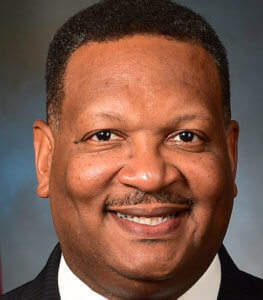
As the former Senior Executive Advisor for the Federal Law Enforcement Training Centers, Marcus Hill (pictured at right) knows a lot about training. When it comes to determining whether training is going to be effective, he recalls something one of his mentors Dr. Phil Callicutt once told him: “Marcus, you have to believe in the song and the singer.”

“I believe the same is true related to determining if so-called leadership training will be effective, hence ‘the song.’ I believe you have to start by assessing the credentials, credibility and reputation of the developer and the delivery of the training, hence ‘the singer.’”

FELTG Nation, we’re pleased to introduce you to our newest singer.

Marcus Hill retired earlier this year, ending a distinguished 37-year federal career that included stints with FLETC, the United States Air Force, the Department of the Navy, and the Transportation Security Administration, where he was instrumental in establishing the TSA infrastructure and screening operations at Jacksonville International and Gainesville Regional airports.

Marcus served an active-duty tour with the US Air Force, and retired from the USAF Reserves in 2007. His honors include a 2017 Presidential Rank Award for Meritorious Service, the 2014 Department of Homeland Secretary’s Under Secretary for Management Partnership Award, DON Civilian Meritorious Service Medal, and USAF Meritorious Service and Commendation Medals.

He is currently the Principal of Hill Management Consultancy LLC, a minority, veteran-owned small business. And he serves on the Senior Executives Association Board of Directors.

You’ll have the opportunity to see Marcus during FELTG’s upcoming Emerging Issues in Federal Employment Law virtual event. Marcus will co-present with FELTG President Deb Hopkins the session “When Employees Go Insubordinate: Don’t Mess With the Wrong Elements” on Tuesday, April 27 from 3:15-4:30 pm.

Recently, Marcus and I had a chance to discuss some of FELTG’s favorite topics — leadership, accountability, and labor relations.

DG: What is a key component of effective leadership that is often overlooked?

MH: Empathy; good leaders must exhibit the capacity for empathy. Effective leaders must have the ability to understand others’ thoughts and feelings from their points of view (insead of) the leader automatically overlaying hers/his. My former boss and good friend, Paul Hackenberry, emphasized this with me. He often says, “You don’t get to decide how others feel.”

DG: What lessons, advice or experiences from your Air Force career had the most impact on your federal civilian career?

MH: I credit the Air Force for developing my teaming skills and providing great opportunities to demonstrate them, in both follower and leader roles. Secondly, the Air Force provided my first significant exposure to strategic planning. It emphasized the importance and value of inculcating this process into your organizational DNA to ensure its long-term sustainability and continued relevance. These two experiences/attributes carried over into my civilian career and positioned the organizations in which I served to enjoy many successes.

DG: The pendulum has swung back to a pro-union Administration. What’s the best way for agency labor relations professionals to carve out a positive working relationship with unions? 

MH: Pro-union administrations really allow and expect labor relations professionals to actively engage and include union officials, representing bargaining units, in the planning and execution of their agencies missions. The belief is promoting and leveraging a partnering relationship will result in less labor-management turmoil, and more opportunities to achieve organizational wins through unity of efforts. The best way to carve out a positive working relationship with unions is “to seek to understand before being understood.” Create expectations to share appropriate pre-decisional information, exploit opportunities to dialogue in advance of making unilateral decisions and collaborating to achieve mutually desirable results which satisfy the mission and lion share of people that perform it.

DG: What do you suggest for supervisors and/or leaders who are having a difficult time navigating change?

MH: Actively engage change, don’t run from it. Change is consistent and here to stay. I view change as a process consisting of various phases – shock, denial, acceptance, plan, execute and overcome. The easier you can get through the first two phases, the quicker you can get to identifying and achieving the opportunities presented in the change. There are always opportunities in the change.

DG: What do you think is stopping supervisors from holding their employees accountable for performance and conduct?

MH: Two reasons. The first is supervisors not having a good understanding of the governance related to poor performance and misconduct, and their authorities within laws, regulations and policies. The second is supervisors not feeling comfortable that the institution will support them in holding employees accountable. Therefore, they take on the mindset it’s too hard and risky to pursue. That is why it is critically important to ensure all institutional managers and supervisors are knowledgeable and properly trained to carry out their duties in this space.

DG: What’s your favorite part of teaching/presenting?

MH:  My favorite part of teaching/presenting is hearing from former students/participants on how they were able to apply the learning objectives to achieve desired results. I also like to observe the facial expressions when they “get it” during the training session.

Mr. Hill teaches on numerous FELTG topics, including Leadership, Labor Relations, Employee Relations, and EEO. If you’d like to bring Mr. Hill to your agency (onsite or virtually) for training, contact me at Gephart@FELTG.com.

By Deborah Hopkins, March 16, 2021

For the past 20+ years, we have taught a principle in performance cases that has been around since the beginning of the Civil Service Reform Act: An agency does not need to justify putting an employee on a performance demonstration period, what we at FELTG now refer to as a DP, formerly known as a PIP. In teaching that well-established principle, we relied on the statute (5 U.S.C. 4302-4303), relevant OPM regulations, and a number of foundational MSPB cases, such as  Wilson v. Navy, 24 M.S.P.R. 583 (1984); Wright v. Labor, 82 M.S.P.R. 186 (1999); and Clifford v. USDA, 50 M.S.P.R. 232 (1991).

Imagine our surprise last week when the Federal Circuit issued a decision that said an agency must have substantial evidence that the employee was performing poorly BEFORE it is allowed to put an employee on a PIP. Santos v. NASA, No. 2019-2345 (Fed. Cir. Mar. 11, 2021).

Not long after beginning work for a new supervisor, the appellant (Santos) was placed on a 45-day PIP, and given 11 deliverable assignments. His supervisor met with him to discuss his progress and give him feedback on his work product. The supervisor ultimately determined that Santos’s performance on the deliverables was unsatisfactory, so she proposed removal for unacceptable performance, and the deciding official concurred in the penalty.

Santos appealed and claimed, among other things, that he was mistreated because of his military service, and that work he did not perform while he was on military leave was unfairly used to assess his performance. Part of his appeal included a claim that he should never have been put on a PIP in the first place, something the Board AJ did not address because the matter was well-settled in  MSPB case law: “[A]n agency is not required to prove that an appellant was performing unacceptably prior to the PIP.” Wright v. Labor, 82 M.S.P.R. 186 (1999). On review of the Board’s case, the Federal Circuit said:

The Board has held that … an agency [is not required] to prove that an employee was performing unacceptably prior to the PIP in order to justify a post-PIP removal. See Wilson [supra](finding “no statutory or regulatory basis” to require an agency to establish appellant’s unsatisfactory performance prior to the PIP1). The Board has consistently applied this interpretation to PIP removals.

Yes, this is as old as time, in our business. But here’s where things change:

We have not directly addressed the question of whether, when an agency predicates removal on an employee’s failure to satisfy obligations imposed by a PIP and that removal is challenged, the agency must justify imposition of a PIP in the first instance under 5 U.S.C. § 4302, though we have discussed the general relevance of pre-PIP performance to a PIP removal. See Harris v. Sec. & Exch. Comm’n, 972 F.3d 1307, 1316–17 (Fed. Cir. 2020). Today we confirm that the statute’s plain language demonstrates that an agency must justify institution of a PIP when an employee challenges a PIP-based removal. [bold added]

The Federal Circuit arrives at this by focusing on the 5 U.S.C. § 4302(c)(6) requirement that agencies remove, reassign or demote employees who continue to have unacceptable performance but only after an opportunity to demonstrate acceptable performance. That opportunity period is the DP/PIP. That’s not new. But then:

To “continue to have unacceptable performance” during the PIP, as the statutory text requires, an employee must have displayed unacceptable performance prior to the PIP. Under the plain meaning of the statute, then, an agency must defend a challenged removal by establishing that the employee had unacceptable performance before the PIP and “continue[d] to” do so during the PIP. [bold added]

Santos also relies on discussion in the notice of proposed rulemaking for OPM’s recently amended regulation at 5 C.F.R. § 432.104, which says agencies are not relieved “of the responsibility to demonstrate that an employee was performing unacceptably – which per statute covers the period both prior to and during a formal opportunity period – before initiating an adverse action under chapter 43.” More from the court:

Confirming an agency’s obligation to justify initiation of a PIP where the PIP leads to removal is particularly appropriate, moreover, in situations resembling Santos’s, where an employee alleges that both the PIP and the removal based on the PIP were in retaliation for protected conduct. Otherwise, an agency could establish a PIP in direct retaliation for protected conduct and set up unreasonable expectations in the PIP in the hopes of predicating removal on them without ever being held accountable for the original retaliatory conduct. Indeed, these are the circumstances in which the issue of pre-PIP performance would be most relevant.

We used to teach that as long as an agency could articulate the reason for poor performance, they could put an employee on a PIP, and the employee could not challenge the placement on a PIP. So, where does that leave us, post-Santos?

What’s New:

  • Agencies must have substantial evidence of poor performance in order to justify putting an employee on a PIP.
  • The decision about how to justify the PIP is up to the agency, so documentation of the reason(s) the supervisor begins the PIP should suffice. That’s something we at FELTG have always taught supervisors to do, in case they ended up defending against a reprisal complaint at some point in the future. But a big question lingers: is that enough?
  • The Federal Circuit does not prescribe any particular evidentiary showing with respect to the employee’s pre-PIP performance, but the emphasis is on continued poor performance. So how long is long enough, before implementing a PIP?
  • The burden is on the employee to prove that the motive for imposing the PIP was discriminatory.

What’s Still the Same:

  • “[A]n employee may not seek review of the decision to implement a PIP at the time it is instituted, either at the Board or otherwise.”
  • The institution of the PIP satisfies the notice component of 5 U.S.C. 4303.

Go ahead and absorb that. It changes 40-plus years of precedent. It’s completely doable, and we’ll explain exactly how to do so during MSPB Law Week later this month, or on May 11 at 11 am ET when we present Justifying Your PIP? What the Precedent-Breaking Fed Circuit Decision Means.

And before I go, let me just say this: some of the facts in this case don’t look good for the agency – the actual administration of the PIP was fine, but the proximity of certain management actions to Santos’s military service should be scrutinized. The Federal Circuit remanded the case back for a Board determination about whether Santos was the victim of reprisal under USERRA, so we don’t have an answer on that yet. But regardless of the outcome, we appreciate his service. Hopkins@FELTG.com

By Meghan Droste, March 16, 2021

When I started writing this article, I was planning to make the headline something about not being an ostrich. This seemed like a somewhat amusing way to highlight one of the points from the case I’m bringing to you, Thomasina B. v. Department of Defense, EEOC App. No. 0120141298 (Feb. 9, 2021). The point being that supervisors shouldn’t ignore obvious evidence of harassment — so don’t stick your head in the sand … hence, the ostrich — and should instead take action right away.  But the more I thought about it, the more I realized that didn’t quite capture the issue in Thomasina B. because the supervisors in this case didn’t just ignore the harassment, they actually participated in it. They also failed to take any appropriate action to end it. Also, fun fact I learned in the process: It turns out that the whole ostriches burying their heads in the sand thing is a myth. The more you know.

So, what is actually going on in Thomasina B.? It’s a textbook case of everything an agency shouldn’t do in a harassment case. The issues started when the complainant’s ex-husband, who also worked for the agency, started rumors that the complainant was a lesbian and that she was in a relationship with another coworker (CW1).

As the Commission found, there was evidence that nearly everyone in the workplace, coworkers and supervisors, were aware of the rumors.  Rather than putting a stop to them, some of the complainant’s supervisors helped spread them.  They also repeatedly took actions against the complainant based on the rumors. They moved her to a different location, told her not to enter the building CW1 worked in, and denied the complainant’s request for a minor schedule modification all because they believed the complainant was spending too much time socializing with CW1 and not enough time doing her own work. The Commission found no evidence that the complainant was doing so. She received a fully successful performance rating, so her performance wasn’t suffering. At least one supervisor wanted her to work more in the same building as CW1, and the supervisors never had an issue with any other employees socializing during the workday. This wasn’t a case of burying their heads in the mud like a flamingo (another bonus animal fact for you), this was a case of supervisors engaging in harassment and opening the agency up to liability.

Unfortunately for the complainant, the harassment did not end there. For nearly a year, another coworker (CW2) repeatedly harassed the complainant because of CW2’s beliefs about the complainant’s sexual orientation. The harassment included CW2 telling the complainant that she was going to hell, that homosexuality is an “abomination,” and that the complainant was harming her children because of her “lifestyle.”

When the complainant reported the harassment to a supervisor, she requested that the agency move CW2 away from her. The supervisor asked CW2 if she wanted to move and when she declined to do so, the supervisor did not take any other action. He didn’t move anyone, he didn’t tell CW2 to stop, and he didn’t investigate the harassment.

The agency issued a FAD finding no liability. It concluded that although CW2 harassed the complainant because of her sex, the agency was not liable because it took appropriate action once it learned of it.

The Commission, unsurprisingly, did not agree. It found the agency liable for two years of harassment by both coworkers and supervisors. I encourage you to read the Commission’s decision in this case, and use it as a blueprint of everything you should not do. Droste@FELTG.com

By Ann Boehm, March 16, 2021

I overheard an agency employee quote the headline above when explaining why a supervisor left his job for another position. The supervisor couldn’t deal with the union any longer.

This is a sad statement. And yet, I’ve heard it before. Heck, I’ve felt that way myself at various times during my career.

Many of you are probably nodding your heads in agreement. But that’s not the way it is supposed to be. And with a pro-union Administration, what’s an agency manager, labor relations specialist, or attorney to do?

If you read my articles, you know by now that I am a hopeless optimist. When drafting this article, I wanted to help those of you in the trenches deal more effectively with the unions, so that you don’t want to leave your jobs.

We know that Congress stated in 5 U.S.C. §7101(a) that collective bargaining “safeguards the public interest” and “contributes to the effective conduct of public business,” but that doesn’t seem to be the case with the supervisor mentioned above. Causing an agency supervisor to leave a job does not seem to be in the public interest. (OK, it could be if the supervisor is a real jerk, but I did not get the sense that was the case with this individual.)

We also know that President Biden’s Executive Order 14003 says, “it is also the policy of the United States to encourage union organizing and collective bargaining.” The President believes that  in supporting the “[c]areer civil servants” who “are the backbone of the Federal Workforce” and “necessary for the critical functioning of the Federal Government,” unions must be empowered.

But aren’t managers and supervisors necessary for the critical functioning of the Federal Government? Of course. There needs to be a balance between labor and management. Creating that balance, however, is an age-old dilemma.

In an effort to help, I’ve thought of some things I believe may help everyone work effectively together (remember – I’m a hopeless optimist).

1 – Read the Federal Service Labor-Management Relations Statute (Statute). Yes, the whole thing. It’s right here. Don’t be frightened. I just re-read the whole thing and timed myself. It took me 15 minutes. You may not understand every word of it, and you don’t need to become an expert on what it says, but it may help you better understand how labor and management are supposed to interact.

Why am I telling you to do this? Because knowledge is power. The Statute is the basic rulebook for all things labor-management relations in the Federal government.

Believe it or not, sometimes even well-meaning unions do things that are contrary to what the Statute says. But if the managers and supervisors dealing with them don’t know that, they just feel like the darn union is too hard to handle.

2 – Read the entire collective bargaining agreement (CBA). This may be more of a time commitment. Although it boggles my mind, the reality is that many of you have to work with 300-plus page CBAs!?! But if you don’t know what it says, you are at the mercy of the union officials who tell you their interpretation. At least skim it and focus in on the areas that seem to arise most frequently with your bargaining unit employees.

3 – Be prepared to fight the union if they legitimately are violating either the Statute or the CBA. That’s the main reason the FLRA exists – to resolve disputes between the agencies and unions. If you complete steps one and two, above, you will be better positioned to challenge the union when it’s legally appropriate.

4 – Stay mission focused. This should be the mantra for all Federal employees – bargaining unit members, managers and supervisors, attorneys, labor and employee relations specialists. Everyone! If you can assert that any union activities are interfering with the agency’s ability to fulfill its mission, you will be better positioned for any potential litigation (and heaven forbid, media interest).

5 – Communicate with the union. Remind them of the agency’s mission. Let them know you have read the Statute and the CBA. Understand that sometimes they will have good ideas that could make the workforce happier and more effective. Tell them, logically and legally, when they are putting bargaining unit employee rights ahead of the rights of the American people on whose behalf you are obligated to serve.

I hope all of this helps. I know the unions feel vindicated by this Administration after feeling attacked by the last one. It is probably frustrating. Stay strong. And I hope none of you want to leave your jobs because you are tired of dealing with the union! Boehm@FELTG.com


By William Wiley, March 16, 2021

Perhaps you’ve heard of this issue. In 2018, the US Supreme Court caused a bit of a civil service uproar when it held that a certain group of administrative law judges were “inferior officers of the United States.” That meant that each had to be appointed by a Senate-confirmed Presidential appointee to comport with the US Constitution and, thereby, to legally perform their duties.  Lucia v. SEC, 138 S. Ct. 2044 (2018).

You see, the Constitution sets up several categories of Federal civil servants. By far, most people who work for the government are simply “employees” hired by whoever the agency identifies to be the selecting official, and appointed to fill a vacant position. However, there’s another much smaller group of employees who are considered to be “inferior officers of the United States” because they exercise significant authority on behalf of the government. Those individuals –  those inferior officers – must be appointed subject to the Appointments Clause of the Constitution. To comport with the Appointments Clause, the individual must be appointed (i.e., hired) by the President or by someone appointed by the President who has been confirmed by the Senate (such as the agency head). A regular old selecting official at an agency does not have the authority to appointment someone to an “inferior officer” position. (The third group of appointees in the executive branch, not at issue here, are the “Principal Officers,” also known as “non-inferior” officers. Those individuals are appointed only by the President with confirmation by the Senate.)

In Lucia, unfortunately for the SEC, the ALJs at issue there had been appointed without consideration for the appointments clause. When the Court concluded that those SEC ALJs were “inferior officers” rather than just regular old Federal employees, the validity of the decisions that those ALJs had been issuing were called into question. You don’t have to understand what an SEC ALJ does to appreciate from a civil service adjudication aspect what a nightmare Lucia has caused.

Well, it didn’t take long for some smarty-pants agency practitioners to think, “Hey! administrative law judge (ALJ) sounds a lot like administrative judge (AJ). If SEC ALJs have no authority to issue decisions because their appointments don’t comply with the Appointments Clause, then the same must be true for MSPB AJs.” And off they went to object to any appeal filed with the Board subsequent to Lucia, thereby causing roughly 200 Board appeals to be blocked. As there have not been any Presidentially appointed Board members at MSPB for several years, there has been no resolution of these objections. That means that a couple of hundred appellants have nowhere to go with their appeals until we get a functioning Board again, which will happen after President Biden names his nominees and they get confirmed by the Senate.

Obviously, this is a big deal for the entire civil service. Will all the decisions issued by all the MSPB AJs be mooted out once the Justices on the Supreme Court eventually rule on this issue? What about the AJs over at EEOC; are they in the same category? To test your potential to be a Supreme Court Justice, let’s go through the criteria for identifying a position as an “inferior officer” and see what you come up with.

The Appointments Clause of Article II of the Constitution reads as follows:

“[The President] shall nominate, and by and with the Advice and Consent of the Senate, shall appoint Ambassadors, other public Ministers and Consuls, Judges of the supreme Court, and all other Officers of the United States, whose Appointments are not herein otherwise provided for, and which shall be established by Law: but the Congress may by Law vest the Appointment of such inferior Officers, as they think proper, in the President alone, in the Courts of Law, or in the Heads of Departments.” U. S. Const., Art. II, § 2, cl. 2.

Early Supreme Court cases that wrestled with this article concluded that inferior officers of the Federal government exercise “significant authority pursuant to the laws of the United States.” In later cases, the Court reasoned that individuals who are either principal or inferior officers subject to the Appointments Clause “hold a continuing office established by law” and exercise “significant discretion when carrying out ‘important functions.’”

Here are some functions the courts have concluded suggest that work being done is an important function requiring significant authority and discretion:

  • Taking testimony at hearings
  • Receiving evidence and examining witnesses
  • Administering oaths, ruling on motions, and generally regulating the course of a hearing
  • Ruling on the admissibility of evidence, thereby shaping the administrative record

Wow, that’s starting to sound a lot like what an MSPB AJ does. If I were arguing that Board AJs are “officers” of the government that had to be appointed personally by the Chairman of MSPB, I’d rely on a lot of these facts to support my argument.

However, to my read, the whole argument that Board AJs are subject to the appointments clause of the Constitution falls apart when I see that it is the independence of this “significant” authority that has caused the courts to find similar hearing adjudicators to be officers of the government. MSPB administrative judges do not act independent of supervision when adjudicating appeals. They have no guarantee of independent decision-making in law. 5 USC 1205 states that the power to hear and adjudicate appeals within MSPB’s jurisdiction rests in the Merit Systems Protection Board. The Merit Systems Protection Board is defined at 5 USC 1201 as the three Board members appointed by the President with the consent of the Senate. Once appointed, the Board can designate employees to administer oaths, examine witnesses, and receive evidence (5 USC 1201(b)(1)), but nothing in law allows the Board to designate employees as the final arbiter of appeals within MSPB’s jurisdiction.

Relatedly, the Board can appoint by law two categories of individuals to perform these designated functions: “administrative law judges” and “employees.” There must be a meaningful distinction between the two categories or the statute would not have bothered to identify them separately. Courts that have dealt with questions regarding the applicability of the Appointments Clause  to adjudicatory positions have found that individuals occupying “administrative law judge” positions to be exercising “significant independent authority.” Most likely, those individuals identified simply as “employees” do not have equivalent independent authority even though they may be performing functions that appear to be similar.

AJs have no more authority to act than the authority they are delegated by their supervisors. Supervisors of AJs get the authority to delegate authority as it is delegated to them pursuant to statute by the Board members. AJs issue “Initial Decisions,” subject to challenge by either party or simply to unilateral reopening by the Board members themselves. In my opinion, MSPB AJs do important difficult work and are deserving of all the respect that we can give them. However, it seems to me that they are technically below the “significant authority” requirement necessary for the Appointments Clause to be applicable to them. My guess would be that we can continue to rely on their decisions being valid even though they were not hired personally by the Board Chairman. Wiley@FELTG.com

By Meghan Droste, March 16, 2021

This month, we continue our discussion of religious accommodations. In January, we looked at what an agency needs to do to establish that providing a religious accommodation to an employee would be an undue hardship (namely that there would actually be some kind of burden or hardship). This month, we’re going to take a step back in process and look at what an agency must do before it can even think about raising the issue of a hardship.

An agency cannot put forward a defense of undue hardship unless it can show that it made some effort to accommodate the complainant. This does not have to be the accommodation the complainant requested. If that accommodation would require more than a de minimis burden, the agency can look at alternative accommodations. But it must show that it made a good faith effort to provide some kind of effective accommodation before it can deny a request because of the burdens associated with it.

The Commission’s decision in Mac O. v. U.S. Postal Service, EEOC App. No. 0120152431 (Nov. 29, 2017) provides a good illustration of what an agency needs to do. In this case, the complainant’s position as a city carrier assistant required him to work up to six days a week, twelve hours per shift, including holidays, Saturdays, and some Sundays. After working for about one month, the complainant submitted a request to not work from sunset on Friday to sunset on Saturday for religious reasons. The agency denied his request, saying that granting it would require the agency to pay overtime to other employees.  When asked what efforts the agency made to provide an accommodation to the complainant, his supervisor testified that she wasn’t aware of any.

In its decision, the Commission agreed that having to pay overtime to other employees would be more than a de minimis burden on the agency. However, the Commission still found in the complainant’s favor on this issue.  Why?  As the EEOC noted, “it bears repeating that the Agency cannot raise the issue of overtime or any other financial or logistical issue as an undue hardship until it demonstrates that it made a reasonable effort to find an accommodation that would enable Complainant to practice his religion without having to worry about losing his job.”

In Mac. O., the agency made no effort to determine whether it would be possible for the complainant to swap schedules. It also failed to consider the complainant’s request for a transfer to a location that was closed on Friday evenings and Saturdays. Now it’s possible that schedule swaps wouldn’t have been possible or that there was no available position to transfer the complainant to, meaning that the agency couldn’t have accommodated him without an undue hardship. But because the agency made no effort, let alone a good faith effort, to look into these possibilities, the Commission found it liable for failing to accommodate the complainant.

Just as with requests for disability-related accommodations, make sure you are making a good faith effort to actually provide accommodations before denying a request.  Doing so will save you the headache of unnecessary litigation, and will also make sure your agency’s employees can stay on the job and keep working. Droste@FELTG.com